AI Search Strategy for Interior Designers on Squarespace in 2026
Introduction
Homeowners no longer search Google exclusively for best interior designer in Manchester. They open ChatGPT and ask: I have a small living room with north-facing windows—what interior design style would work best? Within seconds, an AI model returns a personalised recommendation, complete with a style description, colour palette, and sometimes a suggestion to hire a local designer who specialises in that aesthetic.
Interior designers who understand AI search strategy for Squarespace in 2026 will dominate client discovery. Your AI search visibility depends on three factors: structured data that identifies you as an interior designer authority, design style content that AI models cite in their recommendations, and a portfolio strategy that uses image metadata to signal your expertise to AI systems.
This guide shows interior designers on Squarespace exactly how to optimise for AI search engines, secure schema markup compliance, and position yourself as the credible local expert that AI assistants recommend when homeowners seek design solutions. Homeowners are already searching for interior designers via AI—the question is whether they'll find you.
Why Interior Designers Must Think About AI Search in 2026
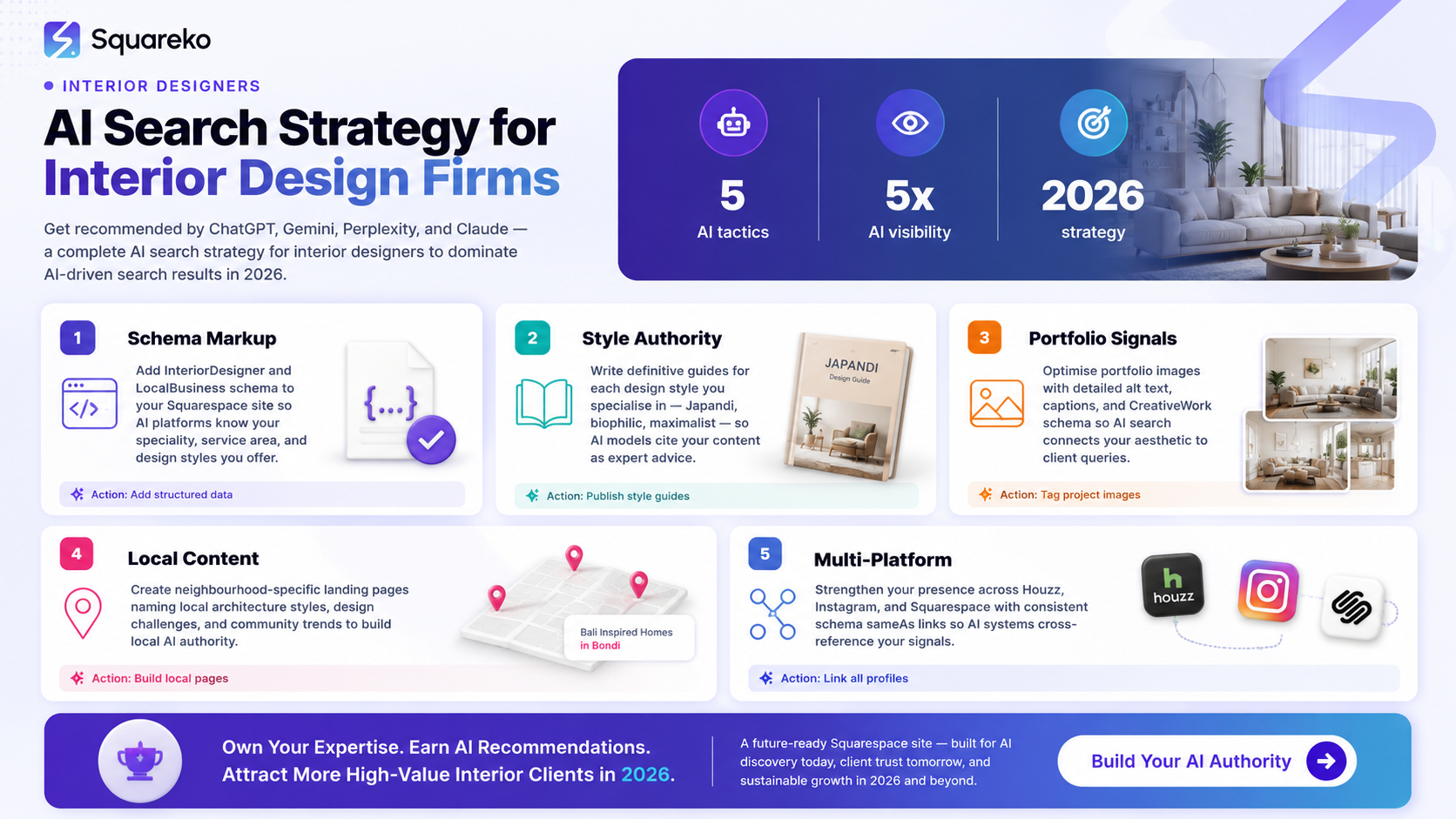
Traditional SEO focuses on ranking in Google Search results. AI Search (AEO—AI Engine Optimization) focuses on being cited, recommended, or quoted within AI assistant responses. The distinction is critical.
When a homeowner asks ChatGPT, I want my bedroom to feel Japandi—which interior designer should I hire? the AI doesn't return a link to Google results. It returns a narrative recommendation, often citing a credible source. That source is typically a website with strong authority signals, properly structured data, and published content that demonstrates expertise in that specific design style.
Homeowners increasingly use AI assistants to research interior designers. Search behaviour data shows rises in prompts like:
Best interior designer in [city] who specialises in biophilic design
Interior design style quiz results—where do I find a designer who offers [style]?
What is Japandi interior design, and which local designer does it best?
These queries don't go to Google. They go to ChatGPT, Gemini, Claude, and Perplexity. If your Squarespace site lacks AI-friendly metadata, schema, and authority signals, you're invisible to homeowners already using AI to shortlist designers.
InteriorDesigner Schema and Why Your Website Needs It
Schema markup is structured data language that tells AI systems what your website is about. For interior designers, the correct schema combination is:
Local Business schema with Interior Designer service Type
Professional Service schema for design-specific services
Organization schema with proper credentials and specialisations
Here's a practical example for your Squarespace site:
{
  "@context": "https://schema.org",
  "@type": "LocalBusiness",
  "name": "Sarah Mitchell Interior Design",
  "serviceType": "InteriorDesigner",
  "description": "Award-winning interior designer specialising in Japandi and biophilic residential design in Greater Manchester",
  "address": {
    "@type": "PostalAddress",
    "streetAddress": "123 Design Street",
    "addressLocality": "Manchester",
    "addressRegion": "Greater Manchester",
    "postalCode": "M1 1AA",
    "addressCountry": "GB"
  },
  "telephone": "+44 (0)161 XXX XXXX",
  "email": "hello@sarahmitchell.design",
  "url": "https://www.sarahmitchell.design",
  "image": "https://www.sarahmitchell.design/images/about.jpg",
  "geo": {
    "@type": "GeoCoordinates",
    "latitude": 53.4808,
    "longitude": -2.2426
  },
  "areaServed": [
    {
      "@type": "City",
      "name": "Manchester"
    },
    {
      "@type": "City",
      "name": "Stockport"
    }
  ],
  "sameAs": [
    "https://www.houzz.co.uk/user/sarahmitchell",
    "https://www.instagram.com/sarahmitchell"
  ],
  "knowsAbout": [
    "Japandi interior design",
    "Biophilic design",
    "Sustainable interior design",
    "Residential interiors",
    "Space planning"
  ]
}
This schema tells AI systems:
Who you are and what you do
Where you operate (geography for local recommendations)
Your specialisations and design styles
Where to find you on trusted platforms (Houzz, Instagram)
What expertise you claim
Squarespace allows schema insertion via custom code blocks or through advanced SEO settings. Add this schema to your homepage, and update it for each landing page focussed on specific design styles or service areas.
Design Style Authority Content: Becoming the AI Citation Source
AI models cite content they deem authoritative. When homeowners ask What is Japandi interior design? ChatGPT or Gemini may quote or reference a source that clearly explains it. If that source is your Squarespace blog, you're positioned as an expert—and the AI will likely recommend your services in follow-up responses.
Create a "Design Style Authority" content strategy:
Identify 5–7 design styles you specialise in (Japandi, biophilic, maximalist, Scandinavian minimalism, cottagecore, etc.)
Write definitive guides for each style, each 1,200–1,500 words:
Historical or cultural context (why Japandi combines Japanese and Scandinavian aesthetics)
Core principles (what makes it Japandi, not just minimalism)
Colour palettes and material choices you use
How to implement it in different room types
Common mistakes homeowners make
Why hire a designer for this style (vs DIY)
Case studies from your portfolio
Optimise for AI citations:
Open with a definition that AI can quote directly (50–80 words)
Use H2 headings that match common homeowner questions
Include a Key Principles section in bullet format
End with your expertise statement (5–6 sentences on why you specialise in this)
Link these guides within your portfolio and service pages so AI systems understand they're authoritative content, not orphaned blog posts.
When homeowners ask Best interior designer for Japandi design in Manchester? the AI may cite your Japandi guide, then recommend you as the local expert who wrote it.
Visual Portfolio Signals for AI Image-Based Discovery
AI systems increasingly analyse portfolio images to understand your aesthetic, client base, and design capability. To optimise visual discovery:
Image Alt Text with Design Details:
Not: Living room redesign
Better: Modern Japandi living room featuring low-profile seating, natural wood flooring, and neutral colour palette with accent greenery, designed for a Manchester townhouse
Image Captions with Schema Context:
Include project location, style, scope, and materials
Example: Biophilic bedroom redesign in Stockport—integrated living wall, natural daylight, sustainable timber bed frame, linen bedding, 2024
Portfolio Page Schema Markup (Creative Work or Design Project schema):
{
  "@context": "https://schema.org",
  "@type": "DesignProject",
  "name": "Manchester Japandi Apartment",
  "description": "Complete interior redesign of a 1-bed apartment using Japandi principles",
  "designer": "Sarah Mitchell Interior Design",
  "image": "https://example.com/project-image.jpg",
  "projectLocation": "Manchester",
  "designStyle": ["Japandi", "Minimalism"],
  "material": ["Oak wood", "Natural linen", "Ceramic tiles"],
  "url": "https://example.com/portfolio/japandi-apartment"
}
Before-and-After Portfolio Sections:
AI systems can identify visual transformation—a strong signal of expertise
Include high-quality before/after pairs
Use consistent lighting and composition to showcase your eye
Style-Specific Portfolio Groupings:
Organise portfolio by design style, not just by room type
Create dedicated pages: "Japandi Projects," "Biophilic Designs," etc.
AI systems link visual consistency to style expertise
Local Content Strategy: Building AI Local Recommendation Authority
AI assistants increasingly provide geographically targeted recommendations. A homeowner in Didsbury asking for a local Japandi designer should see your name—but only if your content builds local authority signals.
Implement a local content strategy:
Neighbourhood-Specific Landing Pages:
Create pages for neighbourhoods you serve: "Interior Design in Didsbury," "Biophilic Design for Altrincham Homes," etc.
Include architectural context (Victorian terraces in Didsbury favour biophilic warmth)
Name local architects, property styles, and design challenges specific to each area
This signals geographic expertise to AI systems
Local Design Challenges Content:
"How to maximise small Victorian living rooms" (relevant to Manchester's housing stock)
"Biophilic design solutions for basement flats" (common in city centres)
AI systems cite location-specific content when recommending local professionals
Service Area Schema with GEO Targeting:
Extend your Local Business schema's "area Served" section with specific neighbourhoods
Use proper schema for multi-location service areas
Local Case Studies:
Feature projects by neighbourhood
Name the street, area, and local architectural style
Example: Japandi redesign of a 1930s semi-detached home in Stockport—addressing period features with contemporary minimalism
Community Design Content:
Write about local design trends, historic properties, or architectural conservation
Mention local suppliers and craftspeople you work with
This builds topical authority for your geographic area
AI Platforms Your Design Clients Use for Inspiration
Understanding where your potential clients discover design ideas helps you build multi-platform authority signals. Interior design clients increasingly use AI assistants throughout their decision journey:
ChatGPT & Custom GPTs:
Homeowners ask for design style quizzes: What interior design style suits my personality?
They request curated mood boards: Create a Japandi colour palette for a 12m² bedroom
They seek local recommendations: Best biophilic interior designers in Manchester
Ensure your Squarespace site appears as a credible source when GPTs cite design expertise
Google Gemini:
Often answers visual design questions with image-based responses
Multi-turn conversations allow clients to refine their design brief iteratively
Gemini may cite your portfolio images if they're properly tagged and accessible
Perplexity:
Known for citing sources directly—if your content is cited, it drives qualified traffic
Homeowners often ask specific design questions; your authority content becomes a primary source
Houzz Platform:
While not AI-driven, Houzz integrates with AI search and feeds AI systems designer data
A strong Houzz profile (professional photos, ideabooks, project descriptions) creates data signals that AI systems cross-reference
Link your Squarespace site to your Houzz profile via schema (same As property)
Pinterest:
AI systems analyse Pinterest boards for design trend signals
Create designer boards that demonstrate your style range and aesthetic consistency
Proper image descriptions and board titles help AI systems categorise your expertise
Instagram:
Homeowners and AI systems track your work through visual storytelling
Consistent posting, well-described projects, and audience engagement build authority
Link your Squarespace site to Instagram; this cross-platform presence strengthens AI credibility signals
To maximise AI discovery, ensure your Squarespace site is the hub where all these platforms point. Your Houzz profile, Instagram, and Pinterest should clearly reference your primary website, creating a web of authority signals that AI systems use to validate your expertise.
Frequently Asked Questions
-
AI systems recommend professionals who meet three criteria: they're structured with proper schema markup (so AI systems understand what you do), they've published authority content on topics AI models cite (design style guides, local expertise), and they have cross-platform credibility signals (Houzz profile, client reviews, published work). Start by adding InteriorDesigner schema to your Squarespace site, publishing 5–7 design style authority guides, and ensuring your Houzz, Instagram, and Google Business profiles are complete and linked.
-
Use a combination: LocalBusiness with serviceType "InteriorDesigner," ProfessionalService for specific offerings, and Organisation schema for your credentials. Include areaServed (the geographic areas you serve), knowsAbout (your design specialities like "Japandi design" or "sustainable interiors"), and sameAs (links to Houzz, Instagram, Google Business). This tells AI systems exactly who you are, what you specialise in, and where to find you validated on trusted platforms.
-
Yes, significantly. Houzz is a trusted design platform that AI systems recognise. A complete Houzz profile with professional photos, detailed project descriptions, client reviews, and specialist badges creates data signals that AI systems cross-reference. Link your Squarespace site to your Houzz profile via schema (sameAs property) and ensure both sites use consistent information about your specialities and service areas.
-
Traditional SEO aims for high ranking in Google Search results. AI search optimisation (AEO) aims for citation and recommendation within AI assistant responses. A homeowner googling "interior designer Manchester" sees a list of results. A homeowner asking ChatGPT "best interior designer for Japandi design in Manchester" gets a narrative recommendation that may cite your website or name you directly. Both matter, but AEO requires a different strategy: authority content, proper schema, and cross-platform credibility.
-
Start with 5–7 definitive guides covering your core specialities. Update or refresh one guide monthly to maintain freshness signals. Publish supporting content (neighbourhood guides, project case studies, client education posts) weekly or fortnightly. AI systems favour consistently updated sites with fresh, authoritative content. A pattern of regular publishing signals that you're an active, engaged expert—not an abandoned site.
-
Yes, but strategically. Use AI for initial drafts or structure, but ensure every guide is fact-checked, reflects your actual design philosophy, and includes genuine examples from your portfolio. AI-generated content without personal expertise and real project examples reads as generic and damages credibility. Homeowners and AI systems can sense the difference between an authentic expert voice and formulaic AI output. Your voice, experience, and real work examples are what build trust.
Conclusion
The interior design industry is shifting. Homeowners no longer search for designers exclusively through Google or Houzz. They open ChatGPT, ask a design question, and expect an AI assistant to recommend a credible local expert. Interior designers who optimise for AI search in 2026—through proper schema markup, authority content, and cross-platform credibility—will capture these emerging client discovery pathways.
Your Squarespace site is your foundation. Add Interior Designer schema to establish your credentials. Publish design style authority guides that AI models will cite. Optimise your portfolio images with detailed metadata so AI systems understand your aesthetic and capability. Build local content that signals geographic expertise. Link your Houzz, Instagram, and Google Business profiles to create a network of credibility signals that AI systems trust.
The interior designers who win in AI search are not those trying to game algorithms—they're those who genuinely build authority through expertise, clarity, and client-focused content. Start today, and position yourself as the designer AI assistants recommend when homeowners seek design solutions in your area.
Take Action
AI search is reshaping how interior design clients find professionals. Don't wait for the shift to complete—build your AI search strategy now.
Squareko.com helps interior designers optimise their Squarespace sites for both traditional search and AI discovery. Our free Squarespace consultation includes a complete schema audit, AI search readiness assessment, and a customised roadmap for building authority content that AI systems cite.
Book your free consultation today and discover exactly how to position your interior design practice for AI-driven client discovery in 2026.

From custom website design to SEO strategy, we help businesses launch a site that looks professional and performs better.

Author Bio
I'm Walid Hasan, a Certified Squarespace Expert and Squarespace Circle Platinum Partner with over 12 years of hands-on experience designing and optimizing high-performing websites. Over the years, I've had the privilege of building more than 2,000 Squarespace websites for clients around the world, always focusing on clean design, strong user experience, and conversion-driven results.