SEO Strategy for Cosmetics Brands Using Squarespace
Introduction
Building a successful cosmetics brand online requires more than just beautiful product photography and compelling copy. Your customers are searching for solutions to skincare concerns, makeup trends, and beauty recommendations every single day. An effective SEO strategy for cosmetics brands on Squarespace ensures your products appear exactly when potential customers are ready to buy.
Squarespace platforms provide powerful built-in SEO capabilities that many cosmetics entrepreneurs overlook. From product page optimisation to technical SEO foundations, this guide reveals the complete roadmap to dominate search results for your niche—whether you specialise in vegan skincare, luxury cosmetics, or niche beauty solutions.
The stakes are high. Cosmetics is one of the most competitive ecommerce categories online. Brands that master SEO gain consistent organic traffic, reduce customer acquisition costs, and build sustainable competitive advantages. Those that ignore SEO struggle against well-optimised competitors and waste marketing budgets on paid ads.
This pillar guide walks you through every element of SEO for Squarespace cosmetics brands, from foundational keyword research through advanced AI search optimisation strategies. You'll discover exactly how to structure your site, craft product descriptions that convert, and position your brand for visibility across Google, Perplexity, and emerging AI search platforms.
Key Takeaways
Keyword research forms the foundation. Target high-intent cosmetics keywords with commercial value rather than generic terms.
Product pages require meticulous on-page SEO. Title tags, meta descriptions, alt text, and schema markup directly influence rankings and click-through rates.
Squarespace technical SEO needs proactive management. Configure XML sitemaps, implement internal linking, manage canonical tags, and ensure mobile responsiveness.
Blog content bridges the gap between awareness and conversion. Educational articles addressing common beauty concerns attract qualified traffic and build topical authority.
AI search engines reward comprehensive, authoritative content. Optimising for Perplexity and Google AI Overviews requires clear citations, structured data, and definitive answers.
Local SEO matters for cosmetics brands. If you offer consultations, workshops, or retail locations, local optimisation drives foot traffic and phone calls.
User experience directly impacts rankings. Page speed, mobile usability, and intuitive navigation are both ranking factors and conversion drivers.
Keyword Research for Cosmetics Brands
Keyword research remains the cornerstone of any successful SEO strategy. For cosmetics brands, the challenge is identifying which keywords your target audience actually searches for—and which keywords convert into paying customers.
Understanding Cosmetics Search Intent
Cosmetics searches fall into distinct categories based on user intent:
Informational Intent – "What is retinol? How to apply foundation? These searches require educational content. Users aren't ready to buy but are researching solutions.
Commercial Intent – Best vitamin C serum for dark spots Affordable concealer for oily skin Users compare products and are nearing a purchase decision.
Transactional Intent – Buy organic lipstick online Cruelty-free mascara shop Users are ready to purchase immediately.
Your keyword strategy should target all three types, but prioritise commercial and transactional keywords for your product pages and homepage. Use informational keywords for blog content that builds topical authority.
High-Value Keyword Patterns for Cosmetics
Focus your research on these proven keyword patterns:
Problem + Solution: acne-prone skin routine, how to cover dark circles, eczema-safe moisturiser
Ingredient-Specific: hyaluronic acid serum benefits, peptide eye cream results, salicylic acid cleanser for sensitive skin
Category + Modifier: best vegan foundation, affordable luxury skincare, fragrance-free sunscreen
Comparison Queries: retinol vs. retinoid, mineral sunscreen vs. chemical, serum vs. toner
Need-Based: travel-size skincare set, skincare for combination skin, makeup for mature skin
These patterns reflect real customer questions and pain points. They convert better than generic terms like cosmetics or skincare products.
Keyword Research Tools Comparison
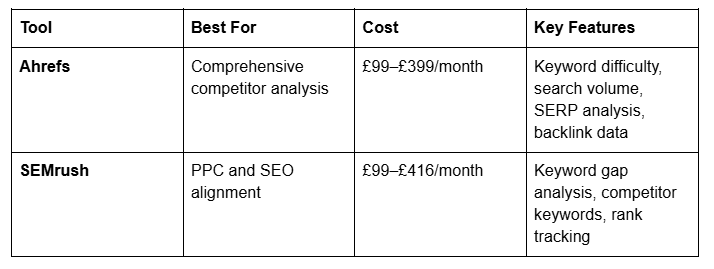
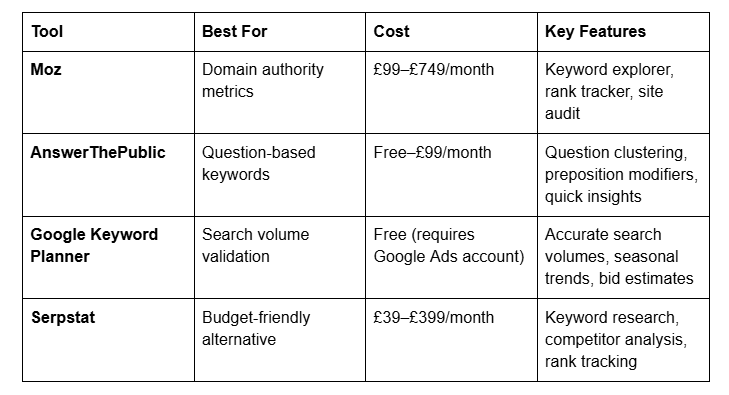
Start with free tools (Google Keyword Planner, AnswerThePublic) to validate your initial keyword ideas. Invest in a paid platform (Ahrefs or SEMrush) once you've identified core opportunity areas. These tools reveal keyword difficulty scores—prioritise keywords where difficulty is moderate (20–50) and search volume is 100+ monthly searches.
Building Your Keyword Map
Create a spreadsheet mapping keywords to pages:
Homepage: Brand name variations, cosmetics brand [location], natural beauty products
Category Pages: Best moisturiser for [skin type],[Ingredient] skincare, [Concern] serum
Product Pages: Product name + benefits/skin type
Blog: Educational content
This structure ensures each page targets specific keywords without internal competition. If multiple pages target the same keyword, you'll dilute your SEO authority.
On-Page SEO for Cosmetics Websites
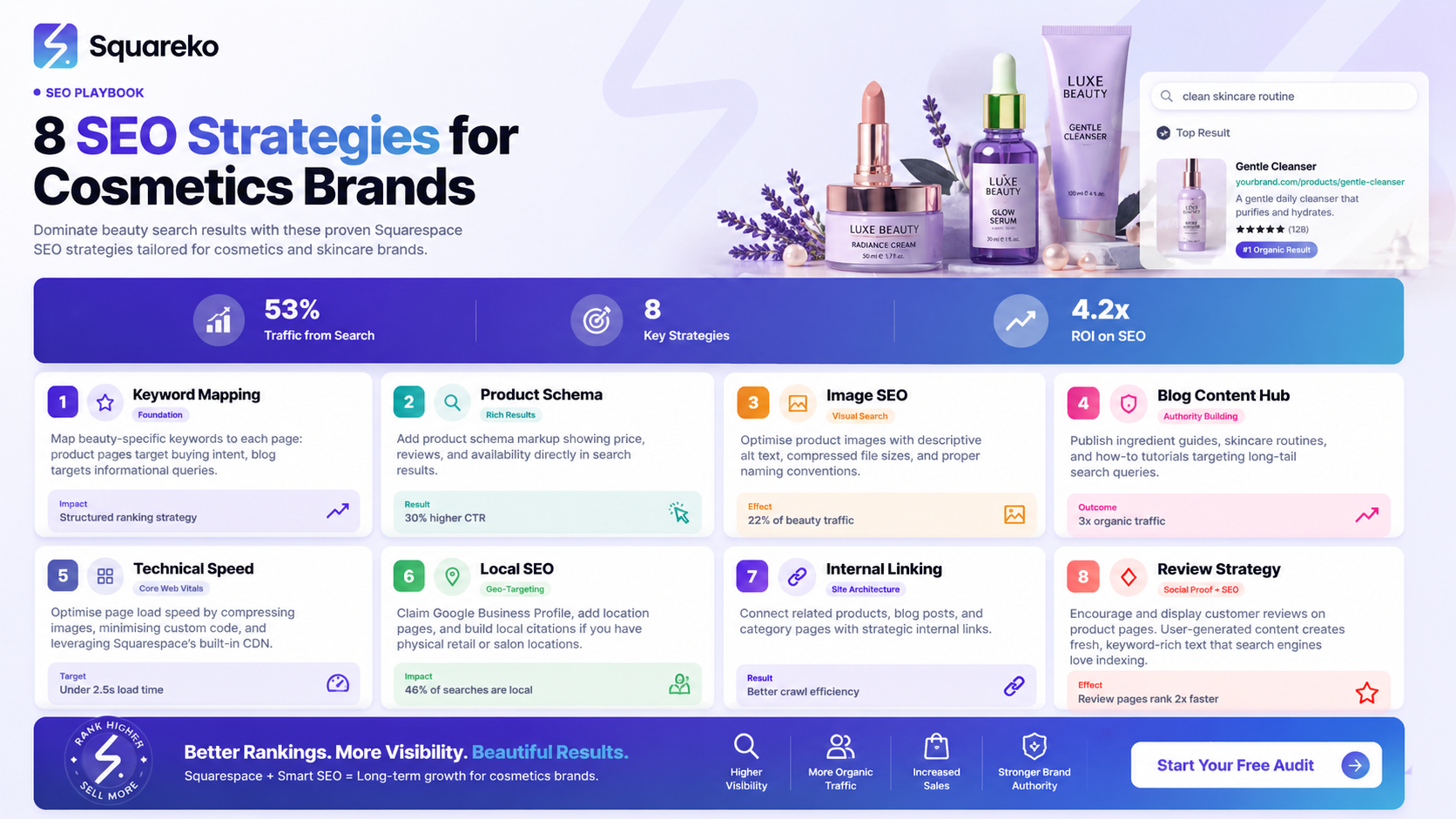
On-page SEO encompasses every element you control on your website. For cosmetics brands, optimisation happens across product pages, category pages, and content pieces.
Title Tags and Meta Descriptions
Your title tag and meta description are the first impression users see in search results. For cosmetics, they must communicate benefits and build confidence.
Title Tag Best Practices:
Include your focus keyword naturally (ideally near the beginning)
Keep under 60 characters (including spaces) to avoid truncation
Add modifiers
Include brand name if space permits
Examples:
✓ Vitamin C Serum for Dark Spots | Radiant Glow Cosmetics
✓ Best Organic Foundation for Sensitive Skin | Natural Beauty
✗ Skincare Products | Shop Our Range (generic, no keyword, no benefit)
Meta Description Best Practices:
Write for humans first (users read these on mobile)
Include your focus keyword
Highlight a unique benefit or offer
Keep between 150–160 characters
Include a subtle call-to-action
Example: Transform your skin with our vitamin C serum. Proven to reduce dark spots in 8 weeks. Vegan, cruelty-free, and dermatologist-tested. Shop now.
Headers and Content Structure
Search engines use header hierarchy (H1, H2, H3) to understand page topic and structure. A clear hierarchy improves both SEO and user experience.
Header Structure Rules:
One H1 per page (your main topic)
2–4 H2s breaking content into main sections
H3s for sub-topics within each section
Never skip header levels (don't jump from H1 to H3)
For a product page, your structure might be:
H1: Vitamin C Serum for Dark Spots | Professional-Strength Formula
H2: Why Vitamin C Benefits Dark Spots
H3: How Vitamin C Brightens Skin
H3: Clinical Research Behind Our Formula
H2: How to Use Our Vitamin C Serum
H3: Morning Routine Application
H3: Compatibility with Other Products
H2: Real Results from Our Community
H2: Frequently Asked Questions
Image Optimisation
Cosmetics websites rely heavily on product imagery. Optimising images improves page speed and accessibility whilst creating ranking opportunities.
Image Optimisation Checklist:
Filename: Use descriptive names
Alt Text: Describe the image for accessibility and search engines
File Size: Compress before uploading. Aim for <100KB per image
Format: Use WebP for modern browsers, JPG for broad compatibility
Dimensions: Size images to match their display size on your website
Squarespace handles some image optimisation automatically, but you control alt text and filenames. Alt text is particularly valuable—it describes images to search engines and users with visual impairments.
Internal Linking Strategy
Strategic internal linking distributes authority across your site and helps search engines understand topic relationships.
Internal Linking Principles for Cosmetics Sites:
Link from blog posts to related product pages
Link from category pages to specific products within that category
Use descriptive anchor text
Limit internal links per page to 5–10 relevant links
Example: A blog post titled The Complete Guide to Treating Dark Spots would link naturally to:
Your vitamin C serum product page
Your category page for serums
A related blog post about other dark spot treatments
This structure signals to search engines that your vitamin C serum is a key resource for dark spot treatment—boosting its ranking potential.
Product Page Optimisation and Schema Markup
Product pages are your revenue generators. Every element—from descriptions to reviews to technical setup—impacts both rankings and conversion rates.
Product Description SEO
Effective product descriptions balance marketing copy with keyword optimisation. They must persuade customers whilst providing search engines with context.
Product Description Framework:
Opening Sentence: Hook with the main benefit and keyword
Problem Statement: What issue does your product solve?
Key Features: Bullet points covering benefits, ingredients, and specifications
How It Works: Simple explanation of application and expected timeline
Ingredients/Formula: Highlight key ingredients naturally
Best For: Specify ideal skin types, concerns, and use cases
How to Use: Clear, step-by-step application instructions
SEO-Optimised Product Description Example (Condensed): Transform dark spots and uneven tone with our Vitamin C Serum, a professional-strength brightening treatment designed for all skin types. Our 20% L-ascorbic acid formulation combines proven brightening power with stabilising antioxidants for visible results within 8 weeks.
Dark spots and hyperpigmentation affect over 70% of adults by age 45. This vitamin C serum targets excess melanin production, reducing dark spots whilst strengthening skin's natural defence system.
✓ 20% L-ascorbic acid for potent brightening
✓ Ferulic acid and vitamin E enhance stability and penetration
✓ Dermatologist-tested for sensitive skin
✓ Vegan and cruelty-free
Best for: All skin types, particularly mature skin and those with sun damage or acne scars.
How to Use: Apply 2–3 drops to cleansed skin before moisturiser. Use once daily initially, building to twice daily. Results visible within 4–8 weeks.
Notice how the description includes relevant keywords naturally: vitamin C serum, dark spots, brightening, uneven tone—without keyword stuffing.
Schema Markup for Products
Schema markup (structured data) helps search engines understand your products and display them with rich snippets (star ratings, prices, stock status) in search results.
Squarespace automatically generates basic product schema, but you can enhance it:
Essential Schema Elements:
Product name and description
Image and URL
Price and currency
Availability (in stock/out of stock)
Ratings and review count
Brand name
Optimal Product Schema (JSON-LD):
{
  "@context": "https://schema.org/",
  "@type": "Product",
  "name": "Vitamin C Serum for Dark Spots",
  "image": "https://yoursite.com/images/vitamin-c-serum.jpg",
  "description": "Professional-strength vitamin C serum targeting dark spots and uneven tone",
  "brand": {
    "@type": "Brand",
    "name": "Radiant Glow Cosmetics"
  },
  "offers": {
    "@type": "Offer",
    "url": "https://yoursite.com/products/vitamin-c-serum",
    "priceCurrency": "GBP",
    "price": "34.99",
    "availability": "https://schema.org/InStock"
  },
  "aggregateRating": {
    "@type": "AggregateRating",
    "ratingValue": "4.8",
    "reviewCount": "1247"
  }
}
Squarespace automatically adds most of this. Focus on ensuring accurate product data and encourage customer reviews—review count and ratings directly influence click-through rates from search results.
Building a Blog Strategy for Cosmetics Brands
Blog content serves three critical functions: ranking for informational keywords, building topical authority, and nurturing customers through the decision journey.
Content Pillars for Cosmetics Brands
Organise your blog around core content pillars—broad topic areas where you establish expertise.
Example Pillars for a Skincare Brand:
Skin Types: Content about oily skin, combination skin, sensitive skin, mature skin
Skin Concerns: Acne, dark spots, wrinkles, dryness, rosacea, eczema
Ingredients: Vitamin C, retinol, hyaluronic acid, niacinamide, salicylic acid
Routines: Morning routines, nighttime routines, seasonal routines, travel routines
Each pillar clusters related blog posts. A post about "skincare for sensitive skin" would link to posts about specific ingredients safe for sensitive skin, common irritants, and product recommendations.
This topical clustering signals expertise to search engines and increases authority across related keywords.
Blog Post Types and Topics
How-To Guides (High Conversion):
"How to Create a Skincare Routine for Sensitive Skin
How to Apply Foundation for a Flawless Finish
Optimise for how to queries and feature your relevant products naturally
Educational Deep-Dives (Authority Building):
"Complete Guide to Vitamin C in Skincare: Benefits, Forms, and Application" (3,000–4,000 words)
"Understanding Skin Barrier Function: Why It Matters and How to Protect It" (2,500–3,000 words)
These establish expertise and earn backlinks from other beauty sites
Comparison Articles (Decision Stage):
"Retinol vs. Retinoid: Which Is Right for Your Skin?" (2,000–2,500 words)
"Physical vs. Chemical Exfoliation: Pros, Cons, and Best Practices" (2,000–2,500 words)
Target comparison keywords where users are evaluating options
Ingredient Spotlights (Quick Reads):
Niacinamide for Acne: Science, Benefits, and How to Use
Shorter posts on specific ingredients drive traffic and link opportunities
Seasonal and Trend-Focused:
"Spring Skincare Refresh: Adjusting Your Routine for Warmer Weather" (1,500–2,000 words)
Capture seasonal search spikes and stay current with beauty trends
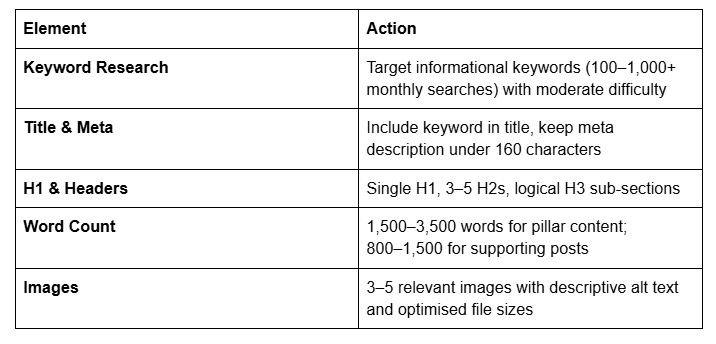
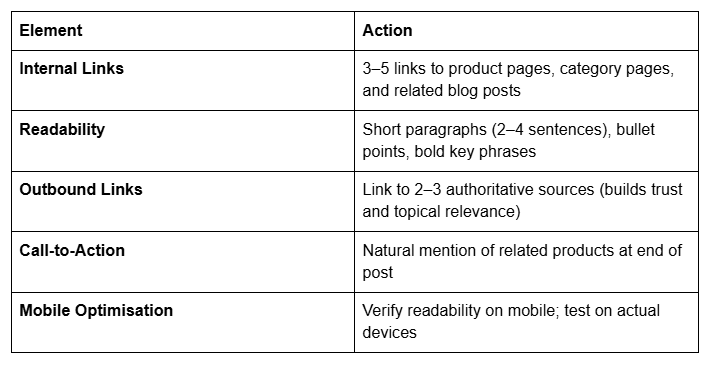
Blog SEO Checklist
Technical SEO on Squarespace
Technical SEO ensures search engines can crawl, index, and understand your website efficiently. Squarespace handles much of this automatically, but several elements require your attention.
XML Sitemaps and Robots.txt
XML Sitemaps tell search engines which pages to crawl and how often they change.
Squarespace automatically generates XML sitemaps at:
yoursite.com/sitemap.xml (primary sitemap)
yoursite.com/sitemap-products.xml (products)
yoursite.com/sitemap-blog.xml (blog posts)
Submit these to Google Search Console and Bing Webmaster Tools. Check sitemaps quarterly to ensure all important pages are included.
Robots.txt controls which parts of your site search engines can access. Squarespace manages this, but verify that important pages aren't blocked.
Mobile Responsiveness and Page Speed
Mobile traffic dominates cosmetics ecommerce. Google's mobile-first indexing prioritises mobile experience.
Mobile Optimisation Checklist:
✓ Test site on real mobile devices (iPhone, Android)
✓ Verify buttons and forms are touch-friendly (minimum 48px tap targets)
✓ Ensure text is readable without zooming
✓ Confirm images scale responsively
✓ Check page load time on 4G connection
Page Speed Optimisation:
Compress images before uploading (Squarespace auto-compresses, but optimise first)
Minimise third-party scripts (reviews, chat widgets, analytics)
Enable browser caching (Squarespace handles this automatically)
Use Squarespace's native image optimization
Test with Google PageSpeed Insights and aim for scores above 80
Target Core Web Vitals metrics:
Largest Contentful Paint (LCP): <2.5 seconds
First Input Delay (FID): <100 milliseconds
Cumulative Layout Shift (CLS): <0.1
Canonical Tags and Duplicate Content
Canonical tags prevent duplicate content issues. Squarespace automatically sets canonical tags pointing to your primary domain, but verify this in your site settings.
Common Duplicate Content Scenarios:
www vs. non-www versions (Squarespace standardises on one; confirm which)
Product pages with multiple filter URLs (set preferred version as canonical)
Blog posts republished on multiple pages
In Squarespace settings, choose one canonical domain structure and stick with it consistently.
SSL Certificate and HTTPS
All modern websites require HTTPS encryption. Squarespace provides free SSL certificates for all domains. Verify your site uses HTTPS (look for the padlock icon in your browser).
Local SEO for Cosmetics Retailers
If your cosmetics brand has physical locations, offers in-person consultations, or ships primarily to a specific region, local SEO drives valuable foot traffic and phone calls.
Google Business Profile Optimisation
Your Google Business Profile (formerly Google My Business) appears in local search results and Google Maps.
Optimisation Steps:
Claim and verify your business profile
Complete all sections: Business name, address, phone, website, hours
Add photos: High-quality product photos, store interior, team members (5–10 images)
Write description: 750–1,000 characters describing your brand, expertise, and services
Choose categories: Primary category (e.g., "Beauty Supply Store") + 2–3 secondary categories
Post regularly: Use Google Posts to share promotions, events, new products (1–2 posts monthly)
Monitor reviews: Respond to all reviews (positive and negative) promptly and professionally
Example Local SEO Keyword Targets:
"Organic cosmetics London"
"Luxury skincare boutique Manchester"
"Vegan makeup store [city name]"
"Best beauty salon [postcode]"
Local Citation Building
Citations are online mentions of your business name, address, and phone (NAP). Consistent citations build local authority.
High-Authority Citation Sources:
Yell.com
Yelp
TripAdvisor (for spas and salons)
Trustpilot
Local chambers of commerce
Directory websites in your niche
Ensure NAP consistency across all citations. Inconsistencies confuse search engines and can harm rankings.
Location-Specific Content
Create content targeting local keywords:
"Best Vegan Makeup in London"
"Why Choose Our Manchester Beauty Clinic"
Blog posts about local beauty events or partnerships
This content attracts local searchers and builds local authority.
Optimising for AI Search Engines (AEO/GEO)
AI search engines (Perplexity, ChatGPT, Claude, and Google AI Overviews) now influence cosmetics discovery. Optimising for these platforms is emerging SEO frontier.
What Is AEO/GEO?
AEO (Answer Engine Optimisation) targets dedicated AI search platforms (Perplexity.ai, ChatGPT).
GEO (Generative Engine Optimisation) targets AI-powered overviews within traditional search engines (Google AI Overviews, Bing Copilot).
How to Optimise for AI Search
1. Create Definitive, Well-Cited Content AI systems prioritise authoritative, sourced content. Write comprehensive guides with clear citations:
✗ "Vitamin C brightens skin and reduces dark spots." ✓ "Studies show vitamin C reduces hyperpigmentation by up to 40% in 8 weeks. L-ascorbic acid, the most bioavailable form, penetrates skin effectively when stabilised with ferulic acid and vitamin E (source: Clinical Cosmetic Investigation, 2023)."
2. Use Structured Data and Schema Markup AI systems parse structured data to understand your products and content:
Product schema with ratings and prices
FAQ schema for common questions
Article schema with publication date and author
3. Answer Specific Questions Directly AI systems look for direct, concise answers to user questions. Structure content with clear Q&A sections:
Q: Is vitamin C serum suitable for sensitive skin?A: Yes, vitamin C serum benefits sensitive skin when formulated correctly. Choose stabilised L-ascorbic acid (20%) paired with soothing ingredients like centella asiatica. Start with lower concentrations (10%) and patch-test before full application.
4. Provide Context and Nuance Avoid oversimplification. AI systems reward depth:
Instead of: Retinol reduces wrinkles. Write: Retinol stimulates collagen production through RARE signalling pathways, increasing cellular turnover. Clinical studies show 0.5–1% retinol reduces fine lines by 20–30% within 8–12 weeks. Results vary based on baseline skin condition, age, sun exposure history, and product formulation. Prescription retinoids (tretinoin, adapalene) show stronger results but carry greater irritation risk.
5. Optimise for People Also Ask Sections PAA boxes influence AI search results. Answer related questions comprehensively in your content:
Is vitamin C or retinol better?
Can I use vitamin C with other actives?
How long before vitamin C serum works?
6. Feature Diverse, Authoritative Sources AI systems value multi-source perspectives. Link to:
Peer-reviewed studies (PubMed, ResearchGate)
Medical institutions (Mayo Clinic, NHS)
Professional organisations (American Academy of Dermatology)
Reputable beauty publications
7. Create FAQ Content Rich in Long-Tail Keywords AI systems use FAQ content to train models. Comprehensive FAQ sections capture AI attention:
What's the difference between L-ascorbic acid and stabilised vitamin C derivatives?
L-ascorbic acid is pure vitamin C—the most potent, bioavailable form. It penetrates skin effectively but degrades quickly (shelf life 3–6 months). Stabilised derivatives (ascorbyl palmitate, MAP) last longer but require higher concentrations (10–20%) for comparable results. Choose L-ascorbic acid for maximum effectiveness; choose derivatives for stability and ease of use.
Measuring SEO Success with Analytics
Data-driven decisions separate successful cosmetics brands from underperformers. Track these key metrics monthly.
Essential SEO Metrics
Organic Traffic Metrics:
Organic sessions: Total visits from organic search
Target: 10–20% monthly growth during year one
Organic conversions: Revenue or goals driven by organic search
Conversion rate: Percentage of organic visitors making purchases
Ranking Metrics:
Keyword rankings: Position in search results for target keywords
Impressions: How many times your pages appear in search results
Click-through rate (CTR): Percentage of searchers clicking your result
Engagement Metrics:
Bounce rate: Percentage of visitors leaving without interaction
Average session duration: Time spent on your site
Pages per session: Content consumption depth
Setting Up Google Analytics and Search Console
Google Search Console:
Verify your website ownership
Submit XML sitemaps
Monitor clicks, impressions, and rankings for each keyword
Track Core Web Vitals
Monitor manual actions or penalties (rare, but critical)
Google Analytics 4:
Install GA4 tracking code (Squarespace integrates easily)
Create custom goals: newsletter signups, product purchases, contact form submissions
Track user journey from organic search to purchase
Segment traffic by device, geography, behaviour
Monthly SEO Reporting
Create a monthly report tracking:
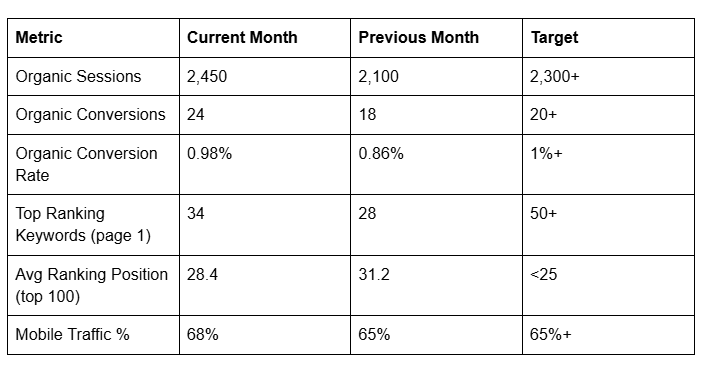
Review monthly to identify trends, celebrate wins, and adjust strategy.
Frequently Asked Questions
-
Expect initial results within 3–6 months, but optimal results typically emerge after 9–12 months of consistent effort. Competitive niches take longer; niche cosmetics categories (e.g., organic vegan lipstick) may rank within 6–8 weeks. Focus on consistent, quality content rather than rapid results.
-
Both matter, but start with product page optimisation (ensure every product page targets specific keywords with quality descriptions) whilst publishing 1–2 blog posts monthly. Blog content builds topical authority and attracts visitors who become repeat customers.
-
Quality over quantity. Twenty highly optimised product pages outrank 200 poorly optimised ones. Each product should target 1–3 specific keywords. Rather than creating many product variations, combine them into fewer, comprehensive product pages targeting broader keyword clusters.
-
In moderately competitive niches, yes. Excellent on-page SEO, consistent blogging, and technical excellence can achieve rankings without backlinks—but they slow progress. Quality backlinks accelerate results dramatically. Focus on earning backlinks through high-quality content, partnerships with beauty influencers, and press coverage.
-
Most Squarespace defaults are excellent. Customise: (1) Meta title and description for each page, (2) Slug URLs (use keywords where relevant), (3) Alt text for all images, (4) Internal linking structure. Enable Google Search Console and Analytics integrations. Avoid changing technical settings unless you have specific reasons.
-
Create comprehensive, well-cited content. Use clear Q&A sections. Include structured data and schema markup. Build topical authority in your niche (e.g., become the definitive source on vitamin C in skincare). These platforms reward authoritative, multi-sourced content—exactly what strong SEO creates.
-
Review and refresh high-performing posts annually. Update outdated statistics, add new research, refresh outbound links, and incorporate emerging keywords. Updating existing content refreshes publication dates (perceived as fresh content) and often improves rankings faster than publishing new content.
-
Both are inseparable. Google explicitly ranks pages higher when Core Web Vitals are strong and users engage deeply. A page optimised for keywords but with poor UX (slow, confusing, hard to navigate) will underperform. Prioritise UX; keyword optimisation follows naturally.
-
AI tools accelerate drafting, but human expertise is essential. Use AI to generate outlines, expand sections, and streamline editing—but fact-check everything, ensure unique perspectives, and inject personality. Google penalises low-quality, purely AI-generated content; it rewards human insight supported by AI efficiency.
Get Expert SEO Help for Your Cosmetics Brand Website
Building SEO momentum for your cosmetics brand requires expertise, strategy, and consistent execution. If you're overwhelmed by technical details, competing priorities, or unclear results, Squareko can help.
At Squareko, we specialize in SEO strategy for ecommerce brands on Squarespace. We've helped cosmetics companies achieve:
50–200% organic traffic growth within 12 months
First-page rankings for high-intent cosmetics keywords
Qualified traffic converting to paying customers
Our SEO services include:
Keyword strategy tailored to your niche and target audience
On-page optimisation for product and content pages
Technical SEO audits identifying and fixing crawl issues
Content strategy building topical authority and topical clusters
AI search optimisation positioning you for Perplexity, ChatGPT, and Google AI Overviews
Monthly reporting tracking progress and ROI
Whether you're launching a new cosmetics brand or scaling existing traffic, our proven process combines technical excellence with strategic content development.
Ready to dominate search results for your cosmetics brand?Contact Squareko for a free SEO audit and discover exactly how much untapped organic growth potential your site has.

From custom website design to SEO strategy, we help businesses launch a site that looks professional and performs better.

About the Author
I'm Walid Hasan, a Certified Squarespace Expert and Squarespace Circle Platinum Partner with over 12 years of hands-on experience designing and optimizing high-performing websites. Over the years, I've had the privilege of building more than 2,000 Squarespace websites for clients around the world, always focusing on clean design, strong user experience, and conversion-driven results.