How Sustainable Fashion Brands Build Their Identity and Audience on Squarespace
Introduction
The sustainable fashion movement has fundamentally reshaped how consumers interact with clothing brands. Unlike fast fashion retailers, sustainable fashion brands must communicate transparency, ethical practices, and environmental responsibility through every element of their digital presence. Your website becomes your most powerful asset for building trust with an increasingly conscious audience.
Squarespace offers sustainable fashion brands an exceptional platform to showcase their commitment to quality, ethics, and environmental stewardship. When designed strategically, your sustainable fashion brand website squarespace presence can effectively communicate your values whilst converting visitors into loyal customers. This guide explores how to build a website that authentically represents your brand's sustainability mission.
Key Takeaways
Squarespace provides built-in tools specifically suited to sustainable fashion brands' unique storytelling needs
Transparency pages dedicated to material sourcing and carbon footprint data build customer trust
Displaying recognised sustainability certifications (B Corp, GOTS, Fair Trade, COSMOS) legitimises your environmental claims
A circular fashion strategy—including take-back programmes and repair services—differentiates your brand
Content marketing focused on sustainability education positions you as an industry authority
Sustainable fashion brand website squarespace success depends on authentic storytelling, not greenwashing
Why Squarespace Works for Sustainable Fashion Brands
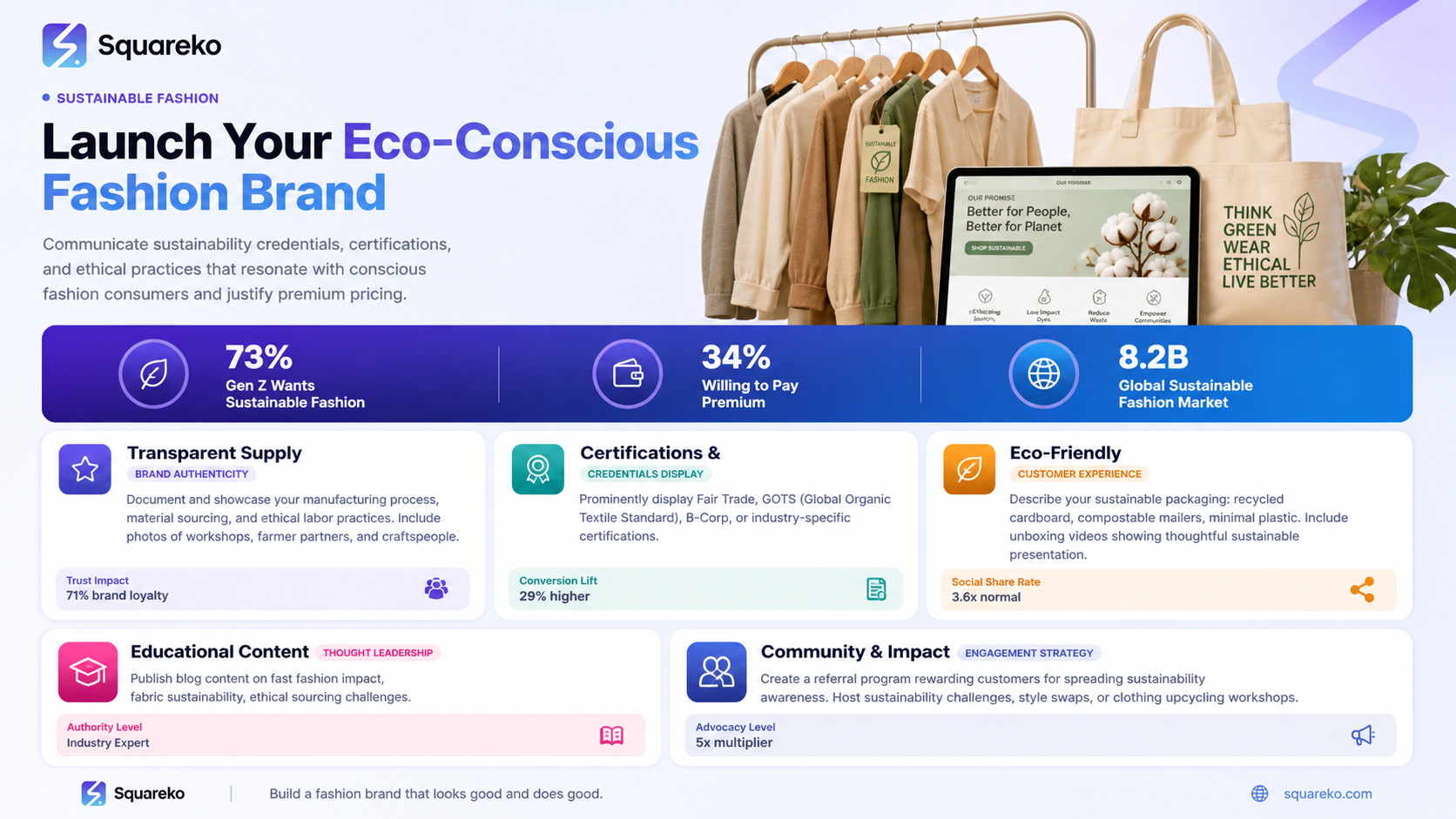
Squarespace has become the preferred platform for conscious brands because it combines aesthetic design capabilities with functional e-commerce tools. Unlike generic builders, Squarespace recognises that sustainable fashion brands require more than product listings—they need spaces to tell their stories.
The platform's clean, customisable templates allow you to create a website that reflects your brand's values without requiring extensive coding knowledge. More importantly, Squarespace integrates inventory management, email marketing, and analytics into one system, streamlining operations so you can focus on building your sustainability narrative.
For sustainable fashion brands specifically, Squarespace's flexibility in page design means you can prominently feature your transparency initiatives. Whether displaying certifications, sharing material sourcing information, or showcasing your supply chain partners, the platform adapts to your storytelling needs.
Building Your Brand Identity on Squarespace
Your brand identity extends far beyond your logo. It encompasses your visual design, tone of voice, photography style, and the values you communicate with every word and image. Sustainable fashion brands must ensure their identity consistently reflects their commitment to ethical practices.
Visual Design and Aesthetic Authenticity
Squarespace's design flexibility allows you to move beyond generic fashion website templates. Consider how your visual identity communicates sustainability. Earth tones, minimalist design, and high-quality product photography convey premium craftsmanship—essential for justifying sustainable fashion's often higher price points.
Your website should feature detailed product images showing material texture, construction quality, and craftsmanship. Customers cannot touch garments online, so photography must compensate by demonstrating durability and attention to detail. Include lifestyle photography that shows your clothes worn by real people in authentic settings, not just on models.
Consistent Messaging Across Pages
Every page should reinforce your sustainability commitment. Your homepage should immediately communicate what makes your brand different. Rather than generic statements about eco-friendly fashion, be specific: Made from organic cotton certified by GOTS or Carbon-neutral shipping on all orders.
Your about page becomes crucial in sustainable fashion. This is where you explain your brand's founding story, your personal commitment to sustainability, and the problems you're solving. Customers want to know the person or team behind the brand. Share your sustainability journey honestly, including challenges you've faced and how you've addressed them.
Designing for Transparency: Material Sourcing and Supply Chain
Transparency separates authentic sustainable brands from greenwashers. Your Squarespace website should dedicate specific sections to explaining your supply chain, material sourcing decisions, and environmental impact.
Material Sourcing Pages
Create a dedicated page outlining each material you use. For organic cotton, explain your certification process and why you chose certified suppliers. For sustainable alternatives like Tencel or recycled polyester, describe how these materials reduce environmental impact compared to conventional options.Include specific supplier information where possible. Many sustainable brands feature their manufacturing partners' locations, facilities, and working conditions. This transparency demonstrates confidence in your practices and builds customer trust. Squarespace's image galleries work well for showcasing supplier facilities or material production processes.
Carbon Footprint Disclosure
An increasing number of consumers want to understand their purchases' environmental impact. If you've conducted lifecycle assessments or carbon footprint calculations, share these results prominently. This might appear on product pages, in your sustainability page, or both.You don't need perfection—transparency about what you know and don't yet know builds more trust than vague environmental claims. Phrases like We're currently calculating our carbon footprint and will share findings by [date] demonstrate genuine commitment.
Supply Chain Map
Squarespace's map integration allows you to visualise your supply chain geographically. Display your fabric suppliers, manufacturing partners, and distribution centres on an interactive map. This creates immediate visual confirmation that your supply chain is deliberately chosen and transparent.
Showcasing Sustainability Certifications
Recognised certifications provide third-party validation of your sustainability claims. Rather than burying these credentials, showcase them prominently on your product pages, homepage, and sustainability section.
Major Certifications for Sustainable Fashion Brands
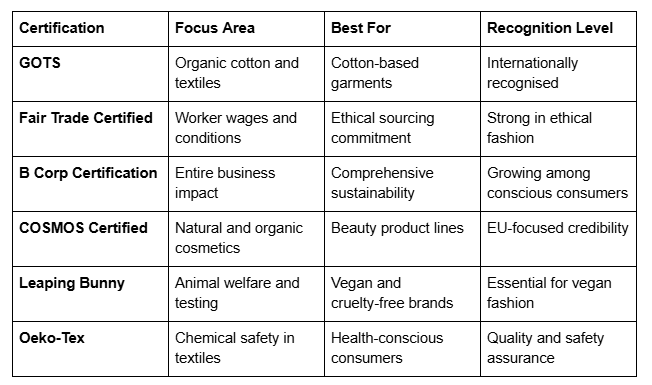
GOTS (Global Organic Textile Standard): The most recognisable organic cotton certification, guaranteeing environmental and social standards throughout production
Fair Trade Certified: Ensures workers receive fair wages and work in safe conditions
B Corp Certification: Comprehensive assessment of your entire business's environmental and social impact
COSMOS Certified: Specifically for natural and organic cosmetics, relevant if you sell any beauty products
Leaping Bunny: Animal testing and animal-derived ingredient standards, critical for vegan fashion brands
Oeko-Tex: Confirms textiles are tested for harmful substances
Displaying Certifications Effectively
On Squarespace, create a certification carousel or gallery page displaying all relevant certifications with explanatory text. Include the certification logo (where permitted), what the certification verifies, and a link to third-party verification resources.Consider creating individual certification pages with deeper explanations. Many customers don't understand what GOTS truly guarantees or why Leaping Bunny matters. Educational content about your certifications turns these badges into trust-building assets.
Product pages should display certifications for specific items. If your basic tee is GOTS certified but your wool jumpers carry Leaping Bunny, make these distinctions clear. Customers appreciate precision and honesty about what makes individual products sustainable.
Creating Content That Educates and Converts
Sustainable fashion brands succeed when they position themselves as educators, not just retailers. Your content strategy should balance product promotion with genuine sustainability education.
Blog Content Strategy
Launch a regular blog covering sustainability topics relevant to your audience. Content ideas include:
Understanding Fabric Certifications: A Sustainable Fashion Guide
How to Extend Your Garment's Lifespan: Washing and Care Tips
The Hidden Environmental Cost of Fast Fashion: What You Should Know
Our Supply Chain Transparency: Where Your Clothes Are Made
Circular Fashion Explained: How We're Reducing Textile Waste
This content serves multiple purposes: establishing authority, improving SEO performance, and providing value beyond product sales. Long-form content targeting keywords like sustainable fashion brand website squarespace positions you as a genuine industry voice.
Video Content
Squarespace integrates video smoothly through YouTube or Vimeo embeds. Consider creating:
Behind-the-scenes manufacturing videos showing your production process
Designer interviews discussing material selection and design philosophy
Customer testimonials highlighting durability and longevity
Educational content about sustainable fabrics or care techniques
Video humanises your brand and demonstrates authenticity. Audiences engage more deeply with video content than static text, and sustainable fashion depends on emotional connection.
Customer Stories
Feature customer testimonials that specifically mention sustainability values. Rather than generic love this jumper feedback, seek out comments like Still looks new after two years of regular wear or Knowing these are ethically made makes me feel good about my purchase.
Create case studies of customers who've owned your pieces for years. These long-term relationships validate your durability claims and demonstrate that sustainable fashion is an investment, not a disposable purchase.
Implementing Circular Fashion Features
Circular fashion—designing products for longevity, repairability, and eventual recycling—represents the future of sustainable fashion. Your Squarespace website should communicate your circular initiatives clearly.
Take-Back Programmes
Many sustainable brands offer take-back programmes where customers return worn items for recycling, refurbishment, or repair. Prominently feature how your take-back system works, incentive structures, and environmental benefits.
Squarespace's page builder allows you to create detailed process flows showing how a customer returns an item and what happens next. Include policies around shipping costs, condition requirements, and what customers receive in return (store credit, refurbished items, etc.).
Repair and Alteration Services
Offer repair services either directly or through approved partners. A sustainable fashion brand extending garment life through repair stands apart from fast fashion retailers. Document your repair offerings clearly: what damage can be repaired, turnaround times, and costs.
Consider offering free repairs on manufacturing defects for a set period after purchase. This builds customer confidence in your quality and demonstrates genuine commitment to longevity.
Rental and Second-Hand Options
Some sustainable brands extend their circular model by offering rental options for occasional-wear pieces or curated second-hand collections of returned items. If you pursue either approach, create dedicated sections on your Squarespace site explaining how these programmes work and their environmental benefits.
SEO Optimisation for Sustainable Fashion
Optimising your sustainable fashion brand website for search engines ensures your content reaches the growing audience searching for ethical fashion options.
Keyword Research and Integration
Target keywords that combine sustainability and fashion interests: sustainable cotton brands, ethical fashion websites, organic clothing brands, fair trade fashion, and eco-friendly activewear. Your primary keyword, sustainable fashion brand website squarespace, should appear naturally in your introduction, headers, and throughout key pages.Use Squarespace's native SEO tools to optimise meta titles, descriptions, and heading structures. Each major page should target specific keywords: your product category pages should target category-specific searches, whilst your sustainability page should optimise for transparency-related keywords.
Internal Linking Strategy
Create thoughtful internal linking between related content. Your blog post about GOTS certification should link to your GOTS-certified products. Your about page should link to your supply chain transparency page. These internal links help search engines understand your site structure whilst guiding visitors deeper into your content.
Technical SEO Fundamentals
Ensure your Squarespace site loads quickly—a critical ranking factor. Optimise product images to reduce file sizes without sacrificing quality. Test your site's mobile responsiveness thoroughly, as most users now access fashion websites via mobile devices.Set up Google Search Console and Google Analytics to monitor your performance. Track which keywords drive traffic, which pages convert visitors into customers, and where your traffic sources originate.
Sustainable Fashion Brand Website Checklist
Use this checklist to ensure your Squarespace site comprehensively communicates your sustainability commitment:
Impact Page: Dedicated page explaining your environmental and social impact, carbon footprint, certifications
Material Sourcing Story: Detailed information about fabric origins, supplier locations, and production processes
Certifications Section: Clear display of all relevant third-party certifications with explanatory links
Returns and Repair Policy: Transparent information about returns, repair services, and take-back programmes
Brand Values Page: Clear articulation of your company values, founding story, and commitment to sustainability
Supply Chain Transparency: Supplier information, facility photos or videos, manufacturing locations visualised on a map
Blog Content: Regular posts about sustainability, material care, and fashion industry topics
Video Content: Behind-the-scenes manufacturing, designer interviews, or educational content
Customer Testimonials: Reviews highlighting durability, ethical values, or quality craftsmanship
Contact Information: Multiple ways for customers to reach you with questions about sustainability practices
Email Collection: Newsletter signup offering sustainability tips or exclusive content to build your audience
Sustainability Certifications Comparison
FAQs
-
Every sustainable fashion brand website should include: home page, about/mission page, product catalogue with detailed descriptions, sustainability/transparency page, blog or resources section, FAQ page, returns/exchange policy, contact page, and legal pages (terms, privacy policy). Your sustainability page should detail certifications, material sourcing, carbon footprint data, and supply chain information. These pages collectively communicate your brand's values and build customer trust.
-
Create a dedicated certifications section or page displaying each certification's logo, explanation of what it verifies, and a link to independent verification. On individual product pages, note relevant certifications using Squarespace's product customisation fields. Consider creating detailed certification pages explaining why each certification matters and how it impacts your products. Use Squarespace's image galleries and text blocks to create an engaging, informative display that educates customers about what your certifications genuinely guarantee.
-
Ethical fashion websites communicate values through transparency (detailed supply chain information), authenticity (founder stories, honest messaging), education (content about sustainable practices), consistency (ethical messaging across all pages), certifications (third-party validation), and accountability (sharing both achievements and challenges). Avoid vague claims like "eco-friendly" without supporting evidence. Instead, provide specific information: "Made from organic cotton certified by GOTS," "Carbon-neutral shipping," or "Fair wages guaranteed for all manufacturers." Include photos of your supply chain, customer testimonials, and regular updates about your sustainability journey.
-
Update your sustainability information at least quarterly. Share progress on carbon footprint reduction, new certifications achieved, or supply chain improvements. Transparency about your sustainability journey—including setbacks and solutions—builds more trust than static claims. Create a blog section dedicated to sustainability updates, allowing you to share news and educational content regularly. This also improves your SEO performance through fresh, relevant content.
-
Drop-shipping conflicts with authentic sustainability communication. Sustainable customers expect transparency about manufacturing locations and ethical practices. If you can't verify your manufacturer's conditions or environmental standards, you cannot credibly claim to be a sustainable brand. Build relationships with ethical manufacturers you can visit, audit, and publicly support. Squarespace supports this business model through inventory management and supplier management tools.
-
Photograph sustainable fashion with emphasis on quality, craftsmanship, and durability. Include detailed close-ups showing fabric texture, stitching quality, and construction. Use lifestyle photography showing real people wearing your garments in authentic settings, not just professional models. Include scale references and multiple angles so customers understand sizing and fit. Consider behind-the-scenes photography showing your manufacturing process or material sourcing. Include videos demonstrating garment durability, care, or styling options. High-quality, honest photography justifies premium pricing and communicates quality that sustainable fashion promises.
-
Calculate your carbon footprint by assessing your entire supply chain: material production (largest impact for most brands), manufacturing, transport, packaging, and returns. Conduct a lifecycle assessment with specialists or use industry tools specifically designed for fashion brands. Once calculated, communicate honestly: share total footprint figures, explain your methodology, detail areas where you've reduced impact, and outline future reduction goals. If you haven't completed a full assessment yet, communicate your timeline transparently. Customers respect honesty about impact more than inflated claims of carbon neutrality.
Call to Action
Building a sustainable fashion brand on Squarespace goes beyond launching an online store—it means creating a digital space where your values become tangible. Every page, every image, every word should reinforce your commitment to ethical practices and environmental responsibility.
Ready to transform your sustainable fashion brand website into a trust-building, conversion-focused asset? At Squareko, we specialise in helping conscious fashion brands design websites that authentically communicate their values. Whether you're optimising an existing Squarespace site or building from scratch, our team understands the unique storytelling needs of sustainable fashion brands.

From custom website design to SEO strategy, we help businesses launch a site that looks professional and performs better.

About the Author
Walid | Founder, Squareko
I'm Walid Hasan, a Certified Squarespace Expert and Squarespace Circle Platinum Partner with over 12 years of hands-on experience designing and optimizing high-performing websites. Over the years, I've had the privilege of building more than 2,000 Squarespace websites for clients around the world, always focusing on clean design, strong user experience, and conversion-driven results.