Best Squarespace Website Design for Life Coaches in 2026
Key Takeaways for Best Squarespace Website Design for Life Coaches
Life coaching websites require warmth, trust, and specificity above all else — design should support these qualities, not overshadow them
The most effective life coach sites lead with the client's transformation, not the coach's methodology
Colour palette, typography, and photography work together to create the emotional tone that either attracts or repels your ideal client
Squarespace's Fluid Engine gives life coaches significant design flexibility without requiring developer expertise
A life coach website that converts isn't just beautiful — it has a clear discovery call pathway on every page.
A life coaching website has a specific job that most web designers don't fully understand: it has to make a stranger trust you with one of the most personal areas of their life. Career coaching, financial coaching, fitness coaching — these are all important. But life coaching asks clients to bring their deepest struggles, their unfulfilled potential, and their most private frustrations to a conversation with someone they've only just found online.
That level of trust doesn't come from a great font choice. It comes from a website that's warm, specific, and deeply human — one that makes the right visitor feel like you understand exactly where they are and genuinely have something to offer them.
In 2026, Squarespace gives life coaches the design tools to create that kind of presence. The platform's Fluid Engine layout system, combined with the right design strategy, allows life coaches to build websites that look professionally designed and feel personally authentic — without requiring a developer or a huge budget.
This guide covers everything you need to know about Squarespace website design for life coaches: from template selection and colour psychology to the conversion elements that make visitors book discovery calls.
What Makes a Life Coach Website Different?
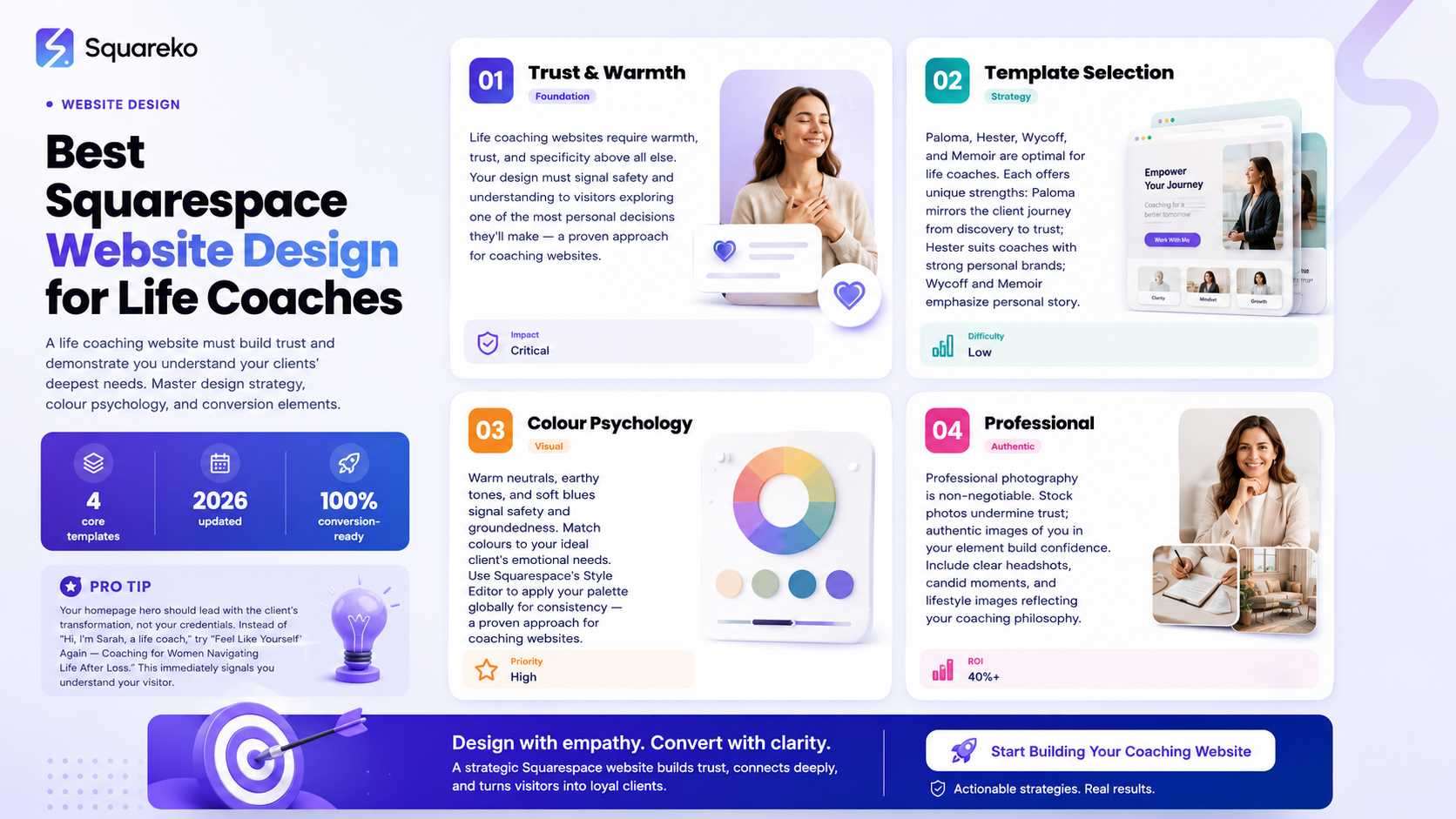
Life coaching covers an enormous range of specialties — mindset coaching, confidence coaching, relationship coaching, spiritual coaching, life transition coaching, grief coaching, burnout recovery coaching, and more. What unifies them is the nature of the client relationship: deeply personal, requiring high trust, and often touching on areas of vulnerability.
This creates specific design requirements that differ from, say, a business coach or a fitness coach.
The Trust Threshold Is Higher
When someone considers hiring a business coach, they're primarily asking: Can this person help me make more money? That's a rational, results-based decision. When someone considers a life coach, they're often asking something more complex: Can I trust this person with the parts of myself I don't show anyone? Do they understand me? Will they judge me?
A life coach website needs to pass a significantly higher emotional trust threshold before visitors are willing to take the next step.
Specificity Matters More
Generic life coaching websites — those that promise to help anyone live their best life — convert poorly because they make no one feel specifically seen. The most effective life coach websites speak directly to a specific type of person in a specific situation: women navigating major life transitions, men recovering from burnout, people in their 40s who feel lost after hitting their goals, recent retirees seeking new purpose.
The more specifically a website speaks to one person, the more that person trusts that the coach understands them.
The Personal Is Professional
Life coaches need to show more of themselves than coaches in other niches. Potential clients are choosing a relationship, not just a service. Your background, your personal journey, your philosophy, and your values are all relevant to whether a client feels you're the right person for them. A life coach website that hides the person behind the credentials misses the point.
Choosing the Right Squarespace Template for Life Coaching
Templates That Work Well for Life Coaches
Plaoma
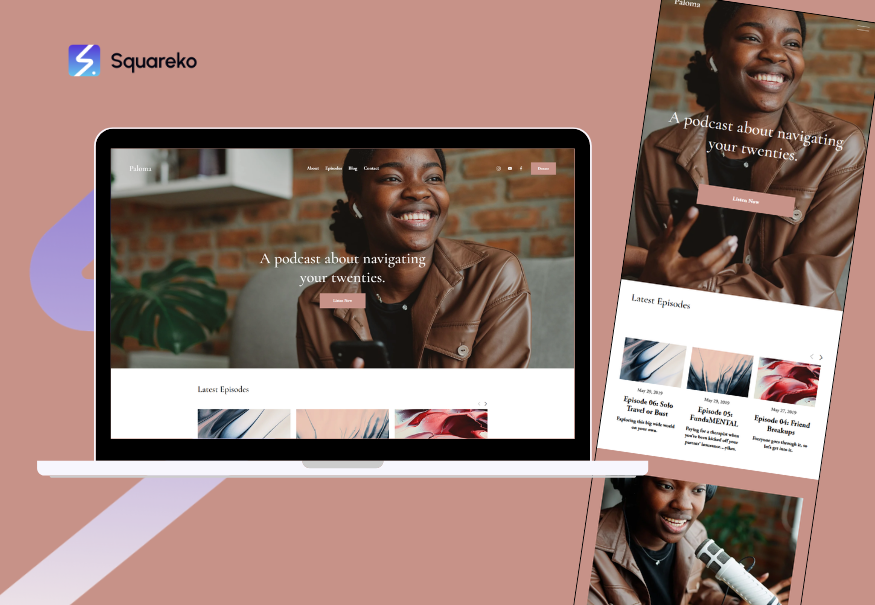
Paloma Squarespace's most popular template for service-based businesses has an intuitive homepage flow: strong hero section → about introduction → services → testimonials → CTA. For life coaches, this narrative structure mirrors the client journey from discovery to trust. The warm, human aesthetic suits coaching perfectly.
Hester
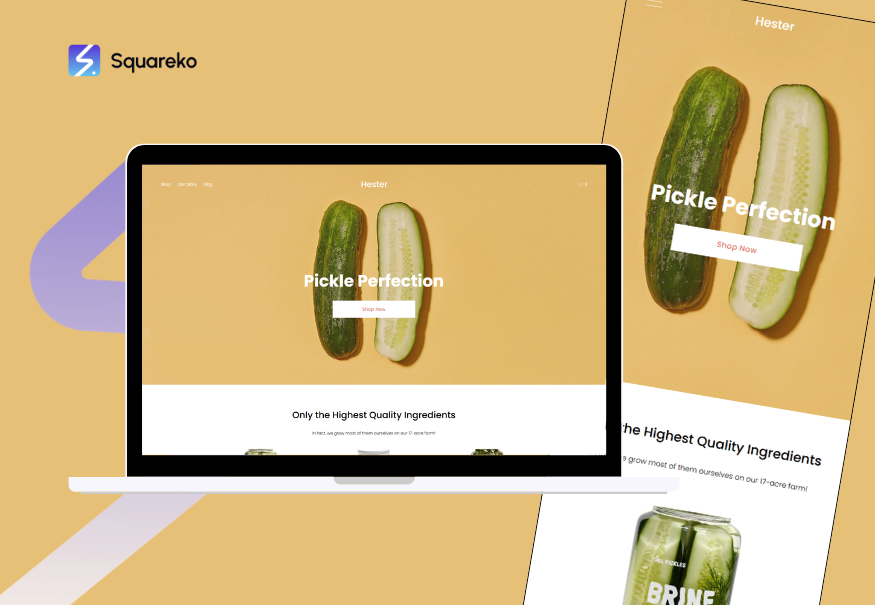
Hester A more editorial template with generous whitespace and distinctive typography. Life coaches with a strong personal brand and quality photography will love how Hester gives their story space to breathe. Less content-dense than Paloma but more elegant.
Wycoff
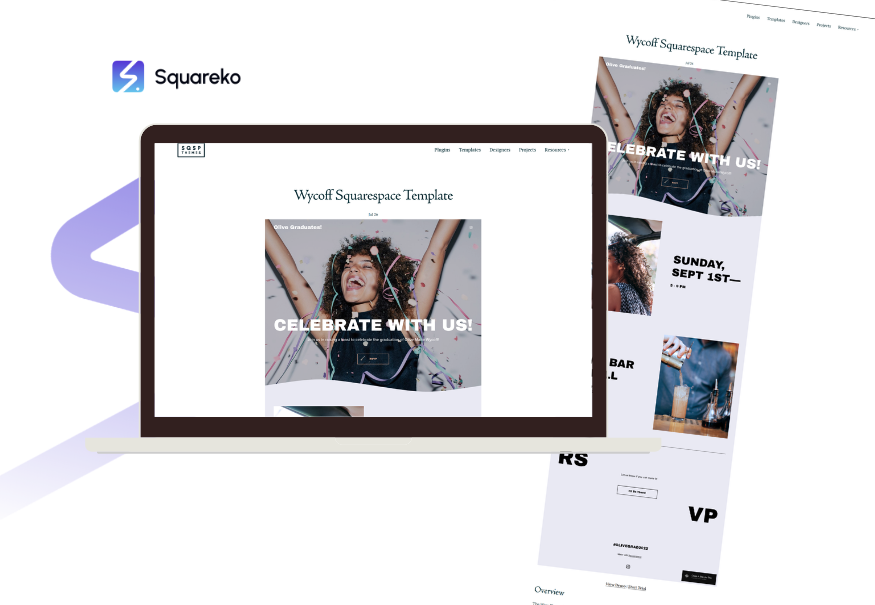
Wycoff A storytelling-first template that uses alternating image and text sections to build a narrative. Excellent for life coaches whose personal journey is central to their positioning — coaches who've been through the experience they now help clients navigate.
What to Look For in a Life Coach Template
Regardless of which template you start with, look for these features:
A hero section with room for a headline, subheadline, and a CTA button
Natural space for professional photography (ideally full-width)
A testimonials section on the homepage (not buried at the bottom)
Clean, readable body text for longer-form about sections
Mobile responsiveness that doesn't lose the warmth of the desktop version
Colour Psychology for Life Coach Websites
Colour is the first emotional signal your website sends. Before a visitor reads a word, the colour palette tells them what kind of experience they're in for.
Warm, Calming Palettes
The most common life coach colour palettes lean warm and calming — because clients come to life coaching from a place of stress, overwhelm, or uncertainty, and the website should immediately signal safety and warmth.
Warm neutrals (cream, warm white, taupe, sand) — create a clean, welcoming foundation. They signal openness and accessibility without the coldness of stark white or the heaviness of dark backgrounds.
Earthy tones (sage green, terracotta, warm brown, dusty rose) — signal naturalness, groundedness, and authenticity. These work well for mindfulness-based coaches, spiritual coaches, and coaches with a nature-informed philosophy.
Soft blues and lavenders — signal calm and clarity. Good for coaches working with anxiety, overwhelm, or mental clarity. Avoid harsh, bright blues — stick to muted, soft tones.
When to Use Bold or Bright Colours
Life coaches working with more ambitious, driven clients — particularly coaches focused on confidence building, leadership, or entrepreneurial mindset — can use more energetic colour palettes. Jewel tones (emerald, sapphire, plum) signal confidence and premium positioning. Bold accent colours (mustard yellow, burnt orange) communicate warmth and energy.
The key is alignment with your ideal client's personality. An anxious client looking for a calm, supportive coach needs different visual cues than a driven entrepreneur looking for a coach who will challenge them.
Squarespace Colour Implementation
In Squarespace set your colour palette globally in the Style Editor — this applies your brand colours consistently across all sections and blocks. Use your primary colour for CTAs (buttons and links) to make action elements stand out. Use secondary and tertiary colours to create visual interest within sections without competing with your CTAs.Photography and Visual Storytelling for Life Coaches
No design element on a life coach website is more important than photography. People are making a trust decision about a person — they need to see you, authentically.
Professional Photography Is Non-Negotiable
Stock photography is obvious and undermines trust. Blurry, poorly lit selfies undermine professionalism. Life coaches need professional photography — images that show you as a real, warm, approachable human being.
Good life coach photography includes:
A clear, warm headshot for your hero section (looking at the camera, with a genuine expression)
Candid shots of you in a natural environment (working, thinking, outdoors) for about and blog sections
If you do in-person coaching, photos of your coaching space
Lifestyle images that reflect your coaching philosophy — if you coach around nature, show yourself in nature; if you coach high-achievers, show a more polished, professional context
What Not to Do
Avoid the following photography clichés that have become visual noise in the life coaching space:
Generic happy woman on a beach photo (screams stock photo)
Woman journalling in a coffee shop as the hero image
Any photo with a follow your dreams or believe in yourself quote overlay
Heavily filtered Instagram-style images that don't look like you in real life
Your photography should look like a more professional, intentional version of who you actually are — not a stock version of what a life coach supposedly looks like.
The Homepage Structure That Converts Life Coaching Visitors
Section 1: Hero — The Transformation Statement
Your hero section should communicate who you help and what changes for them in your work together. Not Life Coach for Women. Something like: Feel Like Yourself Again — Coaching for Women Navigating Life After Loss. Or From Stuck to Moving: Life Coaching for People Who've Forgotten What They Want.
Lead with the client's experience. Make the right person feel immediately that they've arrived somewhere relevant.
CTA button: Book a Free Discovery Call — visible, prominent, specific.
Section 2: The Problem They're Living
A few lines that mirror the client's current experience — the thoughts, feelings, and situations that lead someone to seek a life coach. Written with empathy, not pity. You're tired of waking up knowing something needs to change but not knowing what. You've tried figuring it out alone, and the loop keeps repeating.
This section is where life coach websites most often fall short. Don't rush past it to your credentials.
Section 3: The Bridge — Your Coaching Approach
A brief, human description of how you work. Not a methodology jargon dump — a sentence or two about what the experience of working with you is like. In our work together, we get clear on what you actually want — not what you think you should want — and build a path from where you are to where you could be.
Section 4: Services Overview
Brief cards or sections for each of your coaching offerings — with a one-sentence description and a learn more link to the full programme page. Don't put all the detail on the homepage; just give enough for the right person to know which programme to look at.
Section 5: Client Testimonials
At least two or three specific, outcome-based testimonials from past clients. Ideally photos of the clients with their names. Working with [coach] changed my life is weak. Before our sessions, I was going through the motions. Now I've left the job that was making me miserable, started the business I'd always dreamed of, and feel like I recognise myself again. is compelling.
Section 6: About You (Brief Version)
A short section — 3–5 sentences — introducing you as a person. Not your full bio, just enough to feel human: your name, what you're passionate about, and a personal touch. Link to your full about page.
Section 7: Second CTA
Another booking button at the bottom of the homepage, for visitors who've read all the way down and are now ready to act. You've read this far — let's talk. Book a free 25-minute discovery call.
Life Coach About Page: Building Deep Trust
The about page on a life coaching website is uniquely important. In most service businesses, the about page is secondary — it's nice to have, but clients primarily decide based on the service offering. In life coaching, the about page can be the deciding factor.
Tell the Real Story
Why did you become a life coach? What's your personal relationship to the work you do? Most effective life coach about pages include a genuine story — often one that involves personal struggle, transformation, or a moment of clarity that pointed toward this work.
You don't have to share everything. You don't have to make it dramatic. But the about page needs to give the visitor a real sense of who you are as a person and why this work matters to you. Generic about pages (I'm passionate about helping people live their best lives) convert poorly.
Credentials Without Jargon
Include your coaching credentials, training, and any relevant professional background — but frame them in terms of how they benefit the client, not just as a list of qualifications. I'm an ICF-accredited coach with 500+ coaching hours, which means our sessions are structured, ethical, and informed by the latest coaching research is more compelling than a bare list of acronyms.
A CTA at the End
Your about page should close with a specific invitation: If any of this resonates, I'd love to meet you. Book a free discovery call and let's see if we'd be a good fit. Don't assume visitors will navigate from your about page to your booking page on their own — give them the direct invitation.
Fluid Engine for Custom Layouts
Squarespace's Fluid Engine allows you to create custom grid layouts that would have required a developer in previous platform versions. For life coaches, this means you can create overlapping text and image sections, asymmetric layouts, and multi-column testimonial displays that feel custom-designed rather than template-built.
Video Backgrounds
Squarespace supports video backgrounds in hero sections — a short, looping video of you in your element (walking in nature, writing, sitting in a calm space) can create an immediate atmosphere of warmth and authenticity that a static photo can't match. Used subtly, it's one of the most powerful life coach website features available.
Quote Blocks
Life coaches often work with words, insights, and ideas — and a well-chosen pull quote presented in a prominent quote block can stop a visitor and make them feel understood. Use Squarespace's quote blocks for powerful coaching insights, client statements, or your own philosophy expressed briefly.
Member Areas for Workshops and Resources
If you offer online workshops, self-paced resources, or a community element, Squarespace Member Areas gives you a native tool to gate and sell that content without needing a separate platform.
Is Your Life Coaching Website Working as Hard as Your Coaching Does?
If your Squarespace coaching website isn't generating consistent discovery call bookings, the design isn't doing its job — regardless of how good it looks. Squareko builds Squarespace websites specifically for life coaches that are warm, strategic, and designed to convert the right visitors into ideal clients.
FAQs
-
Paloma, Hester, Wycoff, and Memoir are among the best starting points for life coaches on Squarespace. Paloma offers the most intuitive conversion-focused layout. Hester suits coaches with a strong personal brand and quality photography. Wycoff and Memoir work well for coaches whose personal story is central to their brand. In Squarespace 7.1, any template can be significantly customised with Fluid Engine.
-
Yes particularly for life coaches who want to build organic search visibility and warm up cold traffic. A blog that answers the questions your ideal clients are searching before they find a life coach builds trust, demonstrates expertise, and generates inbound traffic that doesn't depend on paid ads or referrals. Even 1–2 posts per month, published consistently, compounds over 12 months.
-
A DIY Squarespace site costs $23–$49/month (depending on plan) — plus your time. A professionally designed Squarespace life coaching website from a specialist agency like Squareko.com typically costs $2,500–$6,000 for design and build. The investment in professional design is typically recovered quickly for coaches who see even marginal improvements in their discovery call conversion rate.
-
Not necessarily — but an introductory video (even 60–90 seconds) can significantly increase trust and conversion for life coaches. Clients are making a deeply personal decision about who to trust with their inner life. Seeing you speak naturally and authentically before the discovery call dramatically reduces the uncertainty that prevents people from booking.
-
Specificity is the biggest differentiator. A website that speaks directly to a specific person in a specific situation — "coaching for women in their 40s who feel invisible" — stands out far more than a generic "life coaching for everyone" message. Authentic personal photography, a genuine and personal about page, and specific client outcome stories also distinguish a life coaching website from the sea of generic competitors.
-
At minimum: homepage, about page, services/programme page(s), and a booking/contact page. A blog is strongly recommended for SEO and trust-building. Many life coaches also benefit from a testimonials page, a resources page (with free downloads to build an email list), and individual pages for each coaching programme rather than a single combined services page.
-
Squarespace Scheduling (powered by Acuity) is the native booking solution. It allows clients to self-book discovery calls and coaching sessions directly through your website, with automated confirmations, reminders, and intake forms. Set up a "Free Discovery Call" appointment type and embed the booking calendar on a dedicated booking page — then link to it from every CTA on your site.
-
This is genuinely debated among life coaches. Publishing pricing filters out clients who can't afford your programmes (saving time), builds trust with price-conscious clients, and removes the awkward pricing conversation from discovery calls. Not publishing pricing means every interested visitor needs to call — giving you more conversion opportunities but also more calls with non-ideal clients. Most experienced life coaches lean toward publishing pricing once they've clarified their ideal client and pricing structure.

From custom website design to SEO strategy, we help businesses launch a site that looks professional and performs better.

Author Bio
I'm Walid Hasan, a Certified Squarespace Expert and Squarespace Circle Platinum Partner with over 12 years of hands-on experience designing and optimizing high-performing websites. Over the years, I've had the privilege of building more than 2,000 Squarespace websites for clients around the world, always focusing on clean design, strong user experience, and conversion-driven results.