Best Squarespace Templates for Nutritionists and Dietitians in 2026
Introduction
In 2026, your nutrition practice's online presence is non-negotiable. Nutritionists and dietitians need websites that signal clinical credibility while remaining approachable and conversion-focused. Squarespace offers several excellent templates purpose-built for health professionals, each with distinct strengths depending on your specialism and practice model. Choosing the right template is the foundation of a website that attracts qualified clients, builds trust through design, and reduces friction between first impression and consultation booking.
The difference between a generic website and a nutrition-specific one is striking. The best templates for nutrition professionals feature credential-first layouts, intuitive booking systems, space for food and wellness imagery that respects eating disorder awareness, and conversion pathways that turn browsers into paying clients. This guide reviews five Squarespace templates ideal for registered dietitians, nutritionists, sports nutritionists, and nutrition coaches in 2026.
Key Takeaways
Template selection depends on your specialism: Private practice dietitian, NHS clinic support, sports nutritionist, or online nutrition coach each benefit from different design approaches.
Credibility signals must be prominent: Professional registration (HCPC, ANutr, RNutr) and qualifications should be visible above the fold on your homepage.
Booking and consultation urgency are essential: The best templates surface consultation booking with clear CTAs throughout the site.
Food imagery requires thoughtfulness: Avoid triggering imagery for clients with eating disorder histories; opt for warm, clinical-but-approachable aesthetics.
Member areas and digital product space are increasingly necessary: Modern nutrition practices sell meal plans, guides, and courses; your template should support this.
Mobile-first design is non-negotiable: Most prospective clients research nutritionists on mobile devices; responsive templates are mandatory.
Why Template Choice Matters for Nutrition Professionals
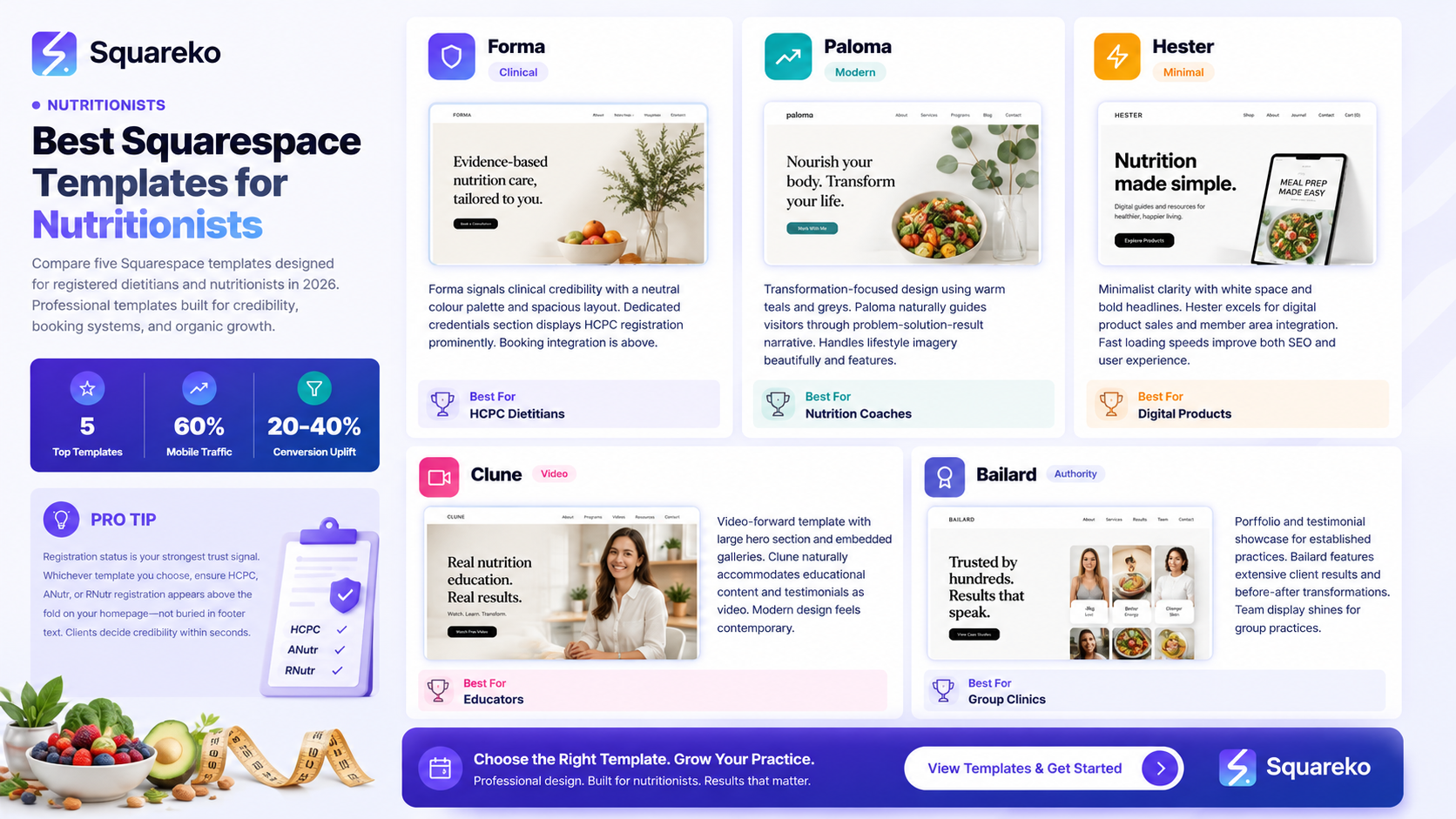
Your website is your first consultation. Prospective clients decide within seconds whether you're qualified, approachable, and trustworthy. A poor template choice—or worse, a generic business template—undermines your expertise before you have a chance to speak. Nutrition professionals face unique website demands. Unlike general health coaches, you need to prominently display professional registration status (HCPC for registered dietitians, ANutr or RNutr for registered nutritionists). Your booking system must feel frictionless, because nutrition clients are often in pain or discomfort and want to schedule quickly. Your imagery must be warm and relatable without triggering individuals with eating disorder histories. And if you sell digital products (meal plans, e-guides, online programmes), your template must accommodate commerce seamlessly.
Squarespace templates are pixel-perfect and require minimal coding knowledge. They're built on a responsive framework, meaning they look professional on desktop, tablet, and mobile. The five templates reviewed below are selected specifically for nutrition professionals because they excel in credibility display, conversion design, and flexibility for growing practices.
Key Template Features for Nutritionists and Dietitians
Before reviewing individual templates, understand what makes a nutrition-specific template effective:
Credential Display: Your template should have a dedicated section above the fold for professional registration, university degree, and relevant certifications. This isn't vanity—it's E-E-A-T (Expertise, Authoritativeness, Trustworthiness) signalling to clients and search engines alike.
Consultation Booking Prominence: Your booking or appointment page should be accessible from the main navigation and appear in multiple places throughout the site. Squarespace Scheduling integration is essential; it reduces back-and-forth email exchanges and lets clients book a free initial consultation immediately.
Service Clarity: Your template should allow you to clearly separate your service offerings. Many nutrition clients are condition-specific (IBS, PCOS, sports performance, weight management); a good template makes it obvious what you specialise in.
Testimonials and Case Studies: Social proof is powerful in nutrition. Your template should give prominence to client testimonials (always anonymised and with consent) or before-and-after transformations (with sensitivity to body image and eating disorder awareness).
Blog and Content Space: Content marketing is critical for SEO in nutrition. Your template must allow for a professional blog with featured images, categories, and easy navigation.
Mobile Responsiveness: Over 60% of nutrition practice website traffic comes from mobile devices. Your template must render beautifully on all screen sizes without clunky menus or broken layouts.
Food and Wellness Imagery Space: Whether you feature food photography, client meals, or wellness imagery, your template should have clearly designated spaces that don't feel forced or stock-photo-cheap.
Digital Product and Member Area Capability: If you sell e-books, meal plans, or online courses, your template should either natively support digital commerce or integrate seamlessly with Gumroad or similar services.
Forma: Clinical Credibility and Warm Approachability

Best for: Private practice dietitians, HCPC-registered professionals, clinic-based nutritionists.
Forma is the gold standard for nutrition professionals who want to signal clinical credibility without appearing cold or sterile. Its layout features a clean, spacious homepage with a prominent hero section that draws the eye to your core message and call-to-action. The template is built on a neutral colour palette (whites, soft greys, sage greens) that conveys calm and professionalism.
Strengths:
Dedicated credentials section: Display your HCPC registration, university degree, and professional body membership prominently.
Booking integration: Squarespace Scheduling appears above the fold with a clear "Book Your Consultation" button.
Services breakdown: Multiple gallery sections allow you to separate services by condition (e.g., IBS dietitian, fertility nutrition, sports nutrition).
Blog prominence: The template gives substantial space to content, encouraging regular posting.
Testimonial carousel: Client reviews are featured prominently, building trust through social proof.
Weaknesses:
Formal aesthetic: For nutrition coaches or online practitioners with a more approachable, casual brand, Forma may feel too clinical.
Limited video integration: If video is central to your content strategy, Clune (below) may be a better fit.
Premium imagery requirements: The clean design requires high-quality photography; stock photos feel out of place.
Pricing: Standard Squarespace template, included in Business and higher plans.
When to choose Forma: You're a registered dietitian (HCPC or ANutr/RNutr), see clients in a professional environment, and want to attract clients who value credentials and clinical approach.
Paloma: Transformation-Focused Design for Private Practice
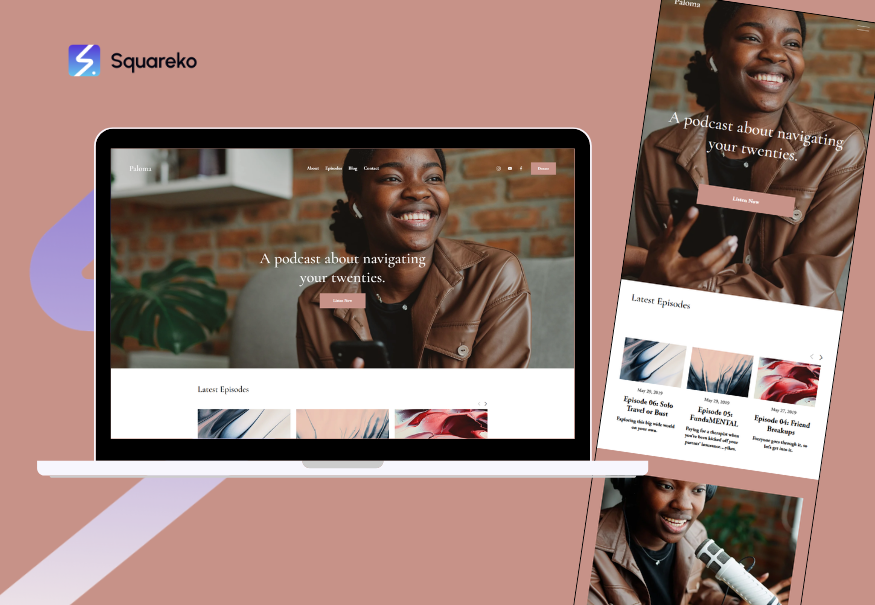
Best for: Private nutritionists, nutrition coaches, transformation and wellness-focused practices, one-on-one and small group programmes.
Paloma is designed around the client transformation narrative. Its homepage features bold imagery, a prominent tagline that speaks to client outcomes, and a clear journey from awareness to action. The colour palette is warm (teals, warm greys, accent colours) without sacrificing professionalism.
Strengths:
Transformation narrative: The layout naturally guides visitors through a "problem-solution-result" journey.
Flexible imagery: Paloma handles lifestyle and wellness imagery beautifully without feeling clichéd.
Multiple CTA opportunities: Booking buttons appear throughout, with attention to conversion psychology.
About section depth: The template allows you to tell your story as a practitioner, building personal connection.
Programme/package showcase: Services are presented as solutions, not commodity offerings.
Weaknesses:
Less clinical in feel: If you're emphasising HCPC registration or advanced clinical credentials, Forma may be stronger.
Fewer credential display areas: You can add these, but they're not native to the template structure.
Video-heavy: Works best with video content; if your practice is text and blog-focused, it may feel underutilised.
Pricing: Standard Squarespace template, included in Business and higher plans.
When to choose Paloma: Your nutrition practice emphasises client transformation, you work primarily with condition-specific or goal-specific clients (e.g., "lose weight sustainably," "manage PCOS naturally"), and you want a warmer, more human-centred aesthetic.
Hester: Minimalist Clarity for Online Coaches and Digital Nutrition
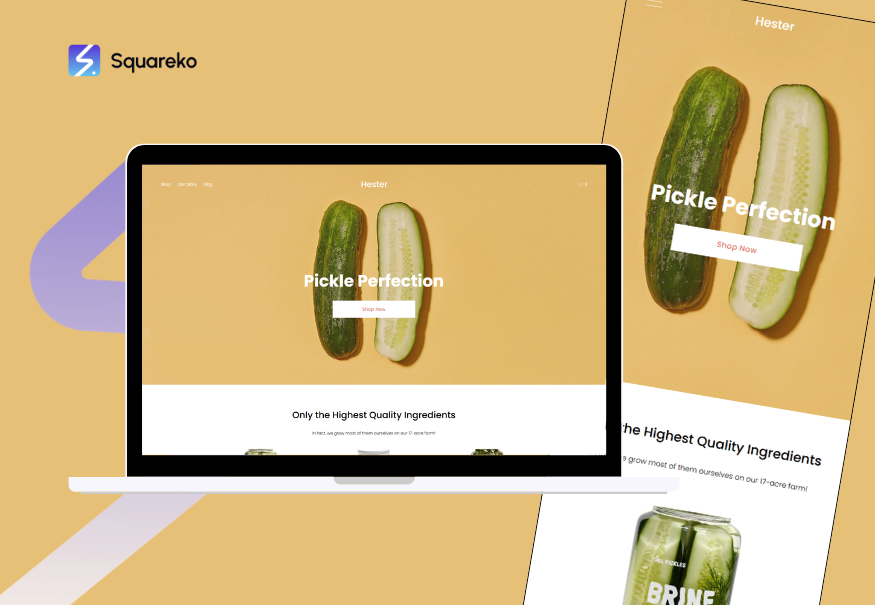
Best for: Online nutrition coaches, digital product creators, nutrition subscription services, remote-only practices.
Hester strips away unnecessary design elements and focuses on clarity and directness. It's the minimalist choice—white space, bold headlines, simple navigation. This works exceptionally well for nutrition coaches selling online programmes or those operating entirely digitally.
Strengths:
Distraction-free design: Visitors focus on your message, not competing visual elements.
Digital product showcase: Product pages are clean and conversion-optimised.
Member area integration: If you sell gated content or online programmes, Hester integrates beautifully.
Fast loading: Minimal design means faster page loads, improving SEO and user experience.
Flexible content hierarchy: You can emphasise what matters most without fighting the template.
Weaknesses:
Bland without care: Hester's minimalism can feel sparse if you don't populate it with quality content and imagery.
Limited space for extensive credentials: Not ideal if credentials and professional body membership are central to your pitch.
Less personality: Some nutrition coaches find Hester too corporate for their brand voice.
Pricing: Standard Squarespace template, included in Business and higher plans.
When to choose Hester: You're a digital-first nutrition coach, sell primarily online programmes or guides, operate remote-only, and appreciate minimalist design that doesn't distract from your core offer.
Clune: Video-Forward Template for Content and Education
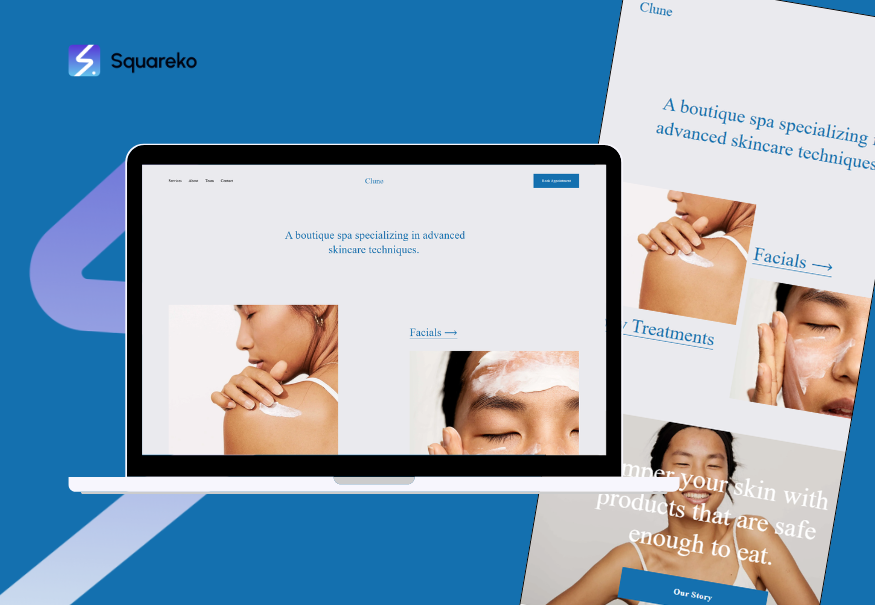
Best for: Nutritionists focused on content marketing and education, video-heavy practices, online course creators, thought leaders.
Clune is designed for video content. Its homepage features a large video hero section, embedded video galleries, and layout that naturally accommodates multiple video elements throughout. If you create nutrition education content, this is your template.
Strengths:
Native video integration: Embed YouTube or Vimeo seamlessly; videos are prominent and fullscreen.
Content-forward layout: Blog posts, case studies, and educational content take centre stage.
Professional appearance: The modern design feels contemporary without being trendy.
Flexible imagery alongside video: You can blend video content with photography naturally.
Testimonial video support: Client testimonials as video feel more authentic than text alone.
Weaknesses:
Requires video content: If you don't create regular video content, Clune will look underutilised.
Slower loading if videos aren't optimised: Large video files can slow page speed; requires attention to Squarespace video settings.
Less structure for credentials: Like Paloma, it's less suited for credential-heavy displays.
Pricing: Standard Squarespace template, included in Business and higher plans.
When to choose Clune: You create regular video content (YouTube channel, online courses, educational series), want to position yourself as a thought leader, and your practice is built on education and demonstration rather than pure consultation sales.
Bailard: Portfolio and Testimonial Power for Established Practices
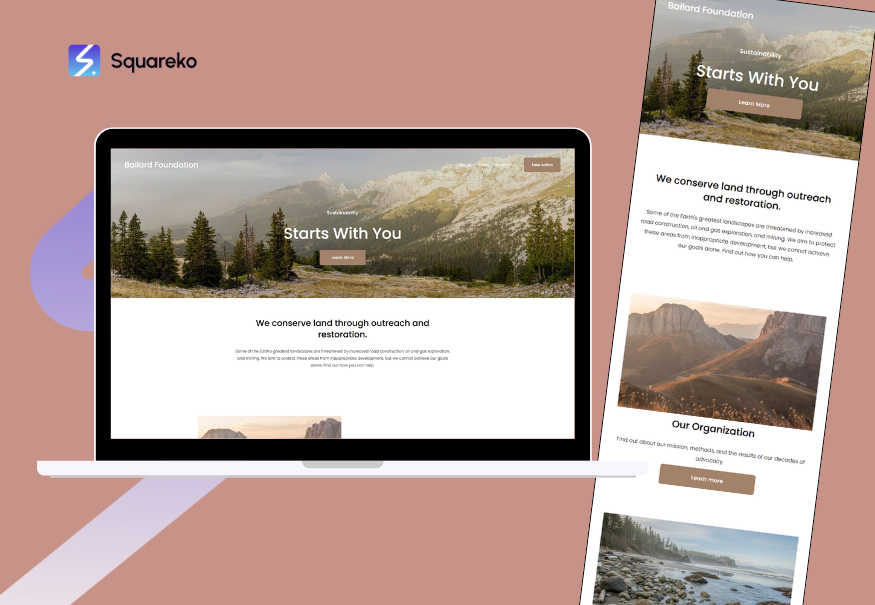
Best for: Established nutrition practices, group practices, multi-practitioner clinics, practices with extensive case study portfolios.
Bailard is built for showcasing extensive portfolios and client testimonials. It's ideal for established practices that want to demonstrate experience and impact at scale. The layout is sophisticated and works beautifully for group practices or clinics with multiple nutritionists or dietitians.
Strengths:
Testimonial showcase: Bailard's testimonial sections are more extensive than other templates, allowing 10+ prominent reviews.
Portfolio flexibility: Case studies and client transformations are the focus, with dedicated gallery space.
Team display: If you have multiple practitioners, Bailard makes team bios and credentials shine.
Gallery and image emphasis: Food and wellness photography is featured beautifully.
Professional polish: The design feels established and trustworthy, ideal for referral-based practices.
Weaknesses:
Requires content depth: You need substantial testimonials and case studies; if you're new or have few, it feels empty.
More complex navigation: Bailard has more sections, which can be overwhelming for simple practices.
Slower to customise: The sophisticated design requires more customisation to feel authentic to your brand.
Pricing: Standard Squarespace template, included in Business and higher plans.
When to choose Bailard: You're an established practice with extensive client testimonials and case studies, operate a group or multi-practitioner clinic, and want to emphasise experience and social proof at scale.
Matching Templates to Your Nutrition Specialisation
Different nutrition specialisms benefit from different template approaches:
NHS or Private Sector Registered Dietitian: Forma is your best choice. Clients seeking dietetic support (referrals or self-pay) expect clinical credibility signals. HCPC registration, university degree, and professional credentials must be immediately visible.
Private Nutritionist (ANutr/RNutr Registered): Paloma or Forma both work well. If your practice emphasises client transformation and outcomes, Paloma's narrative approach is stronger. If you want to lead with credentials, Forma is better.
Sports Nutritionist: Paloma works well here; sports nutrition is often outcome and performance-focused. You can use lifestyle and athlete imagery to create a dynamic aesthetic that appeals to athletes and fitness enthusiasts.
Online Nutrition Coach (Non-Registered): Hester or Paloma. If you sell digital products exclusively, Hester's minimalism and commerce focus is ideal. If you emphasise personal transformation, Paloma's narrative structure suits you better.
Nutrition Content Creator or Educator: Clune, because video is central to your strategy. Your website becomes a hub for educational content, with consultation or digital product sales as secondary revenue.
Group Practice or Clinic: Bailard, because you can showcase multiple practitioners, extensive case studies, and build authority through social proof at scale.
Accessibility, Inclusivity and Eating Disorder Awareness in Template Design
Before finalising your template choice, consider accessibility and inclusivity. Nutrition websites reach people at vulnerable points—those struggling with weight, disordered eating patterns, chronic health conditions. Your template must be considerate and responsible.
Food Imagery Sensitivity: Avoid food photography that emphasises restriction, extreme dieting, or body transformation before-and-afters that could trigger eating disorder relapse. Squarespace templates allow you to choose which imagery to feature; use this power responsibly. Consider imagery that shows:
Diverse body types and ethnicities in before-and-after scenarios (if you use them).
Nourishing, balanced meals rather than "clean eating" or restriction-focused photography.
Real food and meal preparation rather than perfectly styled, unrealistic presentations.
Colour and Contrast: Ensure sufficient colour contrast for users with visual impairments. Forma and Hester excel here with high-contrast, clean designs. If you customise with brand colours, check your contrast ratios.
Inclusive Language: Your template's text should use inclusive language. Avoid "clean eating," "detox," "guilt-free," or language that perpetuates food morality. This goes beyond template choice, but the template structure should allow you to write responsibly.
Alt Text for Images: Squarespace allows detailed alt text for all images. Use this to describe food, meal preparations, and client-facing imagery with care and precision.
Testimonial Representation: If you feature testimonials and case studies, ensure representation across body types, ethnicities, ages, and abilities. This signals inclusivity and trust.
Mid-Post CTA
You're now ready to choose a template that aligns with your nutrition practice. But selecting the right template is just the beginning. Building a website that converts visitors into clients requires more than design—it requires strategy around credibility signals, booking flows, content marketing, and compliance with professional standards.
At Squareko, we specialise in building Squarespace websites for nutrition professionals that look professional, rank on Google, and drive consistent client bookings. We handle the technical setup, ensure your credentials are prominently displayed, integrate booking systems, and optimise your site for local SEO so prospective clients in your area find you first.
Whether you choose Forma, Paloma, Hester, Clune, or Bailard, we'll customise your template to reflect your specialism, build trust through design, and create conversion pathways that turn browsers into paying clients.
Frequently Asked Questions
-
Yes, you can change Squarespace templates, but it's not seamless. Content (text, images, pages) transfers, but custom layouts, spacing, and design customisations may need to be redone. It's best to choose your template carefully at the outset rather than switching later. If you're unsure which template suits your practice, consult a Squarespace designer before committing.
-
Hester is specifically designed for digital commerce and member areas. Paloma and Forma also support Squarespace Commerce well. All templates allow you to sell digital products, but Hester and Paloma are most naturally aligned with digital-product-first business models. If you're selling courses or gated content, ensure your template supports member areas—Squarespace's member functionality is powerful and works across all templates.
-
No. Squarespace templates are highly customisable without coding. You can change colours, fonts, imagery, layout spacing, and content entirely through the Squarespace editor. However, if you want truly bespoke design or advanced functionality (custom booking forms, integration with third-party nutrition software), working with a Squarespace Designer (like Squareko) is worthwhile.
-
All five templates allow you to add credential sections. Forma and Bailard have dedicated areas for credentials. In Paloma, Hester, and Clune, you can add a custom content block or section. The key is placing it above the fold (immediately visible without scrolling) on your homepage. Include your registration number, the year you registered, and the professional body logo (HCPC, BDA, Association for Nutrition, etc.) if you have permission.
-
Yes, all Squarespace templates are fully responsive and mobile-optimised. Over 60% of traffic to nutrition websites comes from mobile devices, so this is non-negotiable. Test your final site on mobile devices (iPhone, Android) and tablets before launching to ensure the booking flow, navigation, and CTAs work smoothly on small screens.
-
Yes. Squarespace Scheduling is built into all templates and allows clients to book consultations directly. Forma and Paloma make booking most prominent in their design. You can also integrate third-party booking tools like Acuity Scheduling or Calendly, though Squarespace Scheduling is simpler and keeps clients on your site.
-
Hester and Forma work best without extensive custom photography because they rely on clean design and white space rather than imagery. Clune and Bailard are image-heavy and require professional photography to look polished. If you're on a tight budget, start with Hester or Forma, invest in professional photography later (headshot, clinic or home office, food preparation), and migrate to Clune or Bailard as your practice grows.
-
Squarespace templates are pre-designed frameworks that you customise. Custom websites are built from scratch, offering unlimited flexibility but requiring more technical knowledge and investment (often 2-3x the cost). For nutrition professionals starting out, a well-customised Squarespace template is ideal: it's affordable, fast to launch, professional-looking, and integrates booking and e-commerce seamlessly. As your practice grows, you can always migrate to custom design if needed.
Ready to Build Your Nutrition Website?
You've identified the perfect template for your specialism. Now it's time to bring it to life. The difference between choosing a template and building a thriving nutrition website on Squarespace is strategy, customisation, and execution.
Squareko specialises in designing and launching Squarespace websites for nutrition professionals. We'll help you:
Select and customise the template that best aligns with your practice model and brand.
Prominently display your professional credentials (HCPC, ANutr, RNutr, university degree, insurance).
Set up frictionless consultation booking with Squarespace Scheduling.
Optimise your site for local SEO so nutrition clients in your area find you first.
Create compelling copy that converts browsers into booked consultations.
Ensure full compliance with professional standards (BDA, ANutr, GDPR).
We'll schedule a 30-minute consultation to understand your practice, specialisation, and goals—then build a website that grows your practice and generates consistent client bookings.

From custom website design to SEO strategy, we help businesses launch a site that looks professional and performs better.

About the Author
Walid is the founder and lead designer at Squareko,
I'm Walid Hasan, a Certified Squarespace Expert and Squarespace Circle Platinum Partner with over 12 years of hands-on experience designing and optimizing high-performing websites. Over the years, I've had the privilege of building more than 2,000 Squarespace websites for clients around the world, always focusing on clean design, strong user experience, and conversion-driven results.