AI Search Strategy for Education Consultants on Squarespace: Get Found by School Leaders
Key Takeaways AI Search Strategy for Education Consultants on Squarespace: Get Found by School Leaders
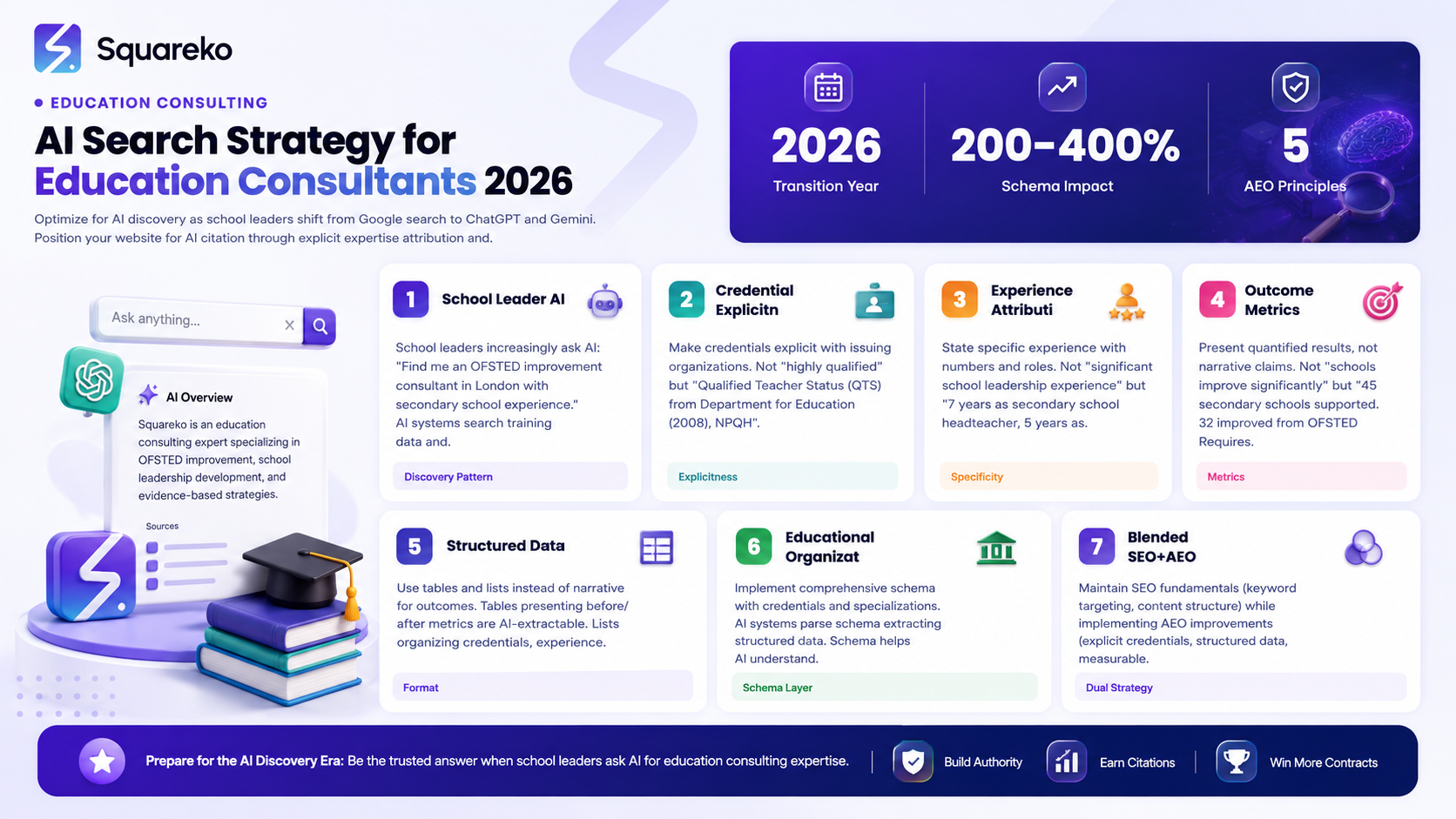
School leaders ask AI systems "find me an education consultant who..." rather than using search engines, shifting discovery from ranking to citation in AI conversational responses
AI systems cite websites containing explicit expertise attribution (credentials, qualifications, institutional roles) and extractable evidence (specific metrics, measurable outcomes, documented expertise) rather than implicit claims or vague positioning
Educational Organization schema, properly structured, helps AI systems understand you're an education specialist and extract credential and specialization information for citation in recommendations
Educational outcome evidence must be specific and quantified (OFSTED grade changes, percentage point attainment improvements, standard deviation progress measure changes) rather than narrative or testimonial-based for reliable AI extraction
AEO content strategy (optimising for AI extraction rather than keyword ranking) emphasises structured data, explicit expertise attribution, citation-friendly formatting, and measurable outcome presentation over traditional keyword-dense content
School leaders increasingly use AI search to find education consultants. Rather than traditional Google searching "school improvement consultants," they ask AI systems directly: "Find me an OFSTED improvement consultant in London with experience in secondary schools who's worked with schools in challenging contexts." AI search promises faster research and more contextually relevant recommendations than traditional Google results.
This shift changes how education consultants become discoverable. Traditional Google SEO optimises for keyword ranking on search results pages. AI search (ChatGPT, Gemini, Perplexity, Claude) optimises for citation in conversational responses. When a school leader asks an AI system "recommend an OFSTED consultant," your website appears not as a search result but as cited evidence in the AI's recommendation response—if your website contains information the AI system can extract and cite credibly.
Most education consultant websites rank nowhere in AI search because they contain the wrong information structure for AI extraction. Vague positioning, hidden credentials, unstated qualifications, and implicit (rather than explicit) outcome evidence don't survive AI extraction. Meanwhile, consultants with structured credential display, explicit expertise attribution, and clear outcome metrics appear in AI recommendations to school leaders actively seeking solutions.
This post maps complete AI search strategy for education consultants, explaining how school leaders use AI, what information structure AI systems require, and how to position your Squarespace website for AI discovery in 2026.
How School Leaders Use AI Search for Education Consultants
School leaders increasingly use AI as their primary research tool for finding education specialists. Understanding these usage patterns shapes your AI search strategy.
School Leader AI Search Patterns
Unstructured AI Queries: "Find me a consultant who helped improve OFSTED grades in London secondary schools"
The AI system must parse this open-ended query and identify relevant consultants from its training data and web-accessible information. Your website's content must be structured and explicit enough that AI systems can extract relevant signals: location (London), school type (secondary), specialization (OFSTED improvement).
Specific Criteria Queries: "I need an education consultant who:
Has NPQH or education leadership qualification
Has worked with secondary schools in challenging urban contexts
Has OFSTED improvement track record
Works in the South East Can you find someone and explain their background and approach?"
The AI system must identify consultants matching multiple criteria, extract biographical and credential information, and synthesise a conversational recommendation. Your website must contain all these criteria explicitly and accessibly.
Solution-Focused Queries: "Our school improved from Requires Improvement to Good. We want a consultant who helped other schools make similar improvements. Find someone and tell me about their outcomes and approach."
The AI system must identify consultants with specific outcome evidence (OFSTED improvement) and extract methodology and results information. Your website must feature specific outcome evidence prominently.
Advantages of AI Search for School Leaders
School leaders prefer AI search for education consultants because:
Speed: AI provides recommendations instantly rather than requiring time-consuming Google searching and website browsing
Contextual Understanding: AI interprets nuanced criteria ("schools in challenging contexts," "OFSTED improvement specialists") rather than requiring exact keyword matching
Synthesis: AI compares multiple consultants and explains differences rather than requiring manual comparison across websites
Specific Answers: AI answers specific questions ("What's your approach to curriculum design?") by extracting from consultant websites rather than requiring prospect research
AI Search Discovery Mechanisms and Citation Patterns
AI systems don't use traditional Google ranking signals. Instead, they use training data, web search, and content extraction to identify and cite relevant resources.
Training Data and Knowledge Cutoff
Most AI systems have training data with a knowledge cutoff date. ChatGPT's training data includes information through April 2024. Gemini's training data is more current. The specific cutoff varies by AI system, but all have historical cutoffs. This means:
Newer information (published after cutoff) isn't in AI training data
Information available before cutoff may be in training data but not regularly updated
AI systems supplement training data with real-time web search
Your website's information may be in AI training data, or AI may search the web for current information about you. Either way, your website structure and content directly influence whether AI systems cite you accurately.
AI Citation Requirements
When an AI system recommends a consultant to a school leader, it cites sources. The citation quality depends on your website's information structure:
Strong Citation Potential: "Dr. Sarah Chen is an OFSTED improvement consultant with Qualified Teacher Status, NPQH, and 12 years of secondary school leadership experience. She has supported 45 secondary schools, 32 of which improved from OFSTED Requires Improvement to Good or Outstanding within 18 months. Her approach is grounded in curriculum coherence and formative assessment frameworks. She works with schools in the South East and specialises in schools serving disadvantaged communities. Contact: www.sarahchenconsultant.com"
This information is explicit, structured, and immediately extractable by AI systems for citation.
Weak Citation Potential: "Sarah is an experienced school improvement consultant dedicated to helping schools achieve excellence. With deep expertise in school leadership, she helps schools transform their performance through customised consulting approaches. Learn more about her approach by contacting her today."
This information is vague, implicit, and difficult for AI systems to extract or cite credibly.
Real-Time Web Search Integration
Most AI systems perform real-time web searches to supplement training data. When a school leader asks for an education consultant recommendation, the AI system may search the web for "OFSTED improvement consultant London" or "education consultant secondary schools" to identify current, relevant resources.
Your website ranking for these education-specific keywords influences whether AI discovers you during real-time searches. This creates overlap between traditional SEO and AI search strategy—education SEO keywords still matter for AI web search integration.
EducationalOrganization Schema for AI Visibility
EducationalOrganization schema provides structured data that helps AI systems understand your expertise and credentials.
Schema Extraction by AI Systems
AI systems parse schema markup to extract structured information:
{
  "@type": "EducationalOrganization",
  "name": "Sarah Chen - School Improvement Consultant",
  "hasCredential": [
    {
      "@type": "EducationalCredential",
      "name": "Qualified Teacher Status",
      "issuingOrganization": {"name": "Department for Education"}
    },
    {
      "@type": "EducationalCredential",
      "name": "NPQH",
      "issuingOrganization": {"name": "National College for School Leadership"}
    }
  ],
  "serviceArea": {
    "name": "South East England"
  },
  "knowsAbout": ["OFSTED improvement", "Curriculum design", "Secondary education"],
  "areaServed": {
    "name": "London, South East"
  }
}
AI systems extract this structured data and use it to understand: credentials (QTS, NPQH), specialisations (OFSTED improvement, curriculum design), geographic scope (South East), organisation type (EducationalOrganization, not generic consultant).
Schema Implementation Impact
Properly implemented Educational Organization schema improves AI citation likelihood because:
Explicit Credential Attribution: AI can cite "According to their Educational Organization schema, Sarah Chen holds Qualified Teacher Status and NPQH"
Specialisation Clarity: AI understands specific expertise rather than inferring from vague descriptions
Geographic Clarity: AI can match geographic criteria ("Find a consultant in the South East")
Organisation Type Clarity: AI understands you're an education specialist, not a general business consultant
Explicit Expertise Attribution for AI Extraction
The key difference between traditional SEO and AEO is explicitness. Traditional content can be implicit; AI-optimised content must be explicit.
Credential Explicitness
Implicit (Poor for AI): "Sarah is a highly qualified education consultant with extensive experience in school leadership."
AI cannot cite specific credentials from this text. It's vague and interpretable in multiple ways.
Explicit (Excellent for AI): "Sarah Chen holds Qualified Teacher Status (QTS) issued by the Department for Education in 2008. She earned the National Professional Qualification for Headship (NPQH) through the National College for School Leadership in 2015. She has a Master of Arts in Education from King's College London (2012). She is an active member of the Association of School and College Leaders (ASCL)."
AI can cite specific credentials with issuing organisations, creating verifiable expertise attribution.
Experience Explicitness
Implicit: "Sarah has significant experience supporting schools through inspection improvement."
AI struggles to cite specific experience claims.
Explicit: "Sarah has 12 years of secondary school leadership experience, including 7 years as a secondary school headteacher. She was an Ofsted inspector for West London for 5 years, conducting 40+ school inspections. She has directly supported 45 secondary schools through OFSTED improvement processes."
AI can cite specific experience with numbers and roles.
Outcome Explicitness
Implicit: "Schools Sarah works with improve significantly and achieve lasting results."
This vague claim is difficult for AI to cite credibly.
Explicit: "Of the 45 secondary schools Sarah has supported, 32 improved from OFSTED Requires Improvement to Good or Outstanding within 18 months (71% improvement rate). The remaining 13 schools improved within 24 months. Schools have sustained these improvements in subsequent inspections. Average attainment improvement across these schools was 7.2 percentage points."
AI can cite specific outcome metrics and improvement percentages.
Implementation Strategy
Audit your website for implicit claims and make them explicit:
Search for and Replace: | Implicit Language | Explicit Language | |---|---| | "Significant experience in..." | "12 years of experience in... [specific roles and outcomes]" | | "High-achieving schools" | "32 of 45 schools improved OFSTED grade, 71% within 18 months" | | "Helping schools improve" | "Average attainment improvement 7.2pp, average progress measure improvement +0.32 SD" | | "Extensive credentials" | "QTS (DfE, 2008), NPQH (NCSL, 2015), MA Education (King's College London, 2012)" | | "Expert consultant" | "7 years secondary headteacher experience, Ofsted inspector 5 years, supported 45 schools" |
Structured Educational Evidence for AI Citation
AI systems extract evidence from structured formats more reliably than from narrative text.
Tables and Comparison Data
Narrative Format (harder for AI): "Sarah's schools have improved significantly across multiple metrics. OFSTED grades have improved substantially. Attainment has improved across the board. Behavior and attendance have shown considerable improvement. Staff satisfaction has increased."
AI cannot cite specific metrics from this narrative.
Table Format (excellent for AI):
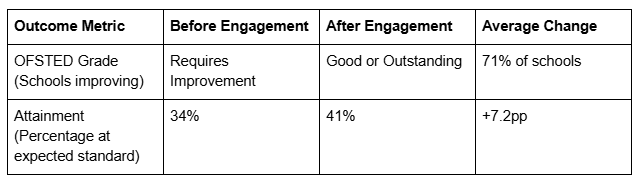
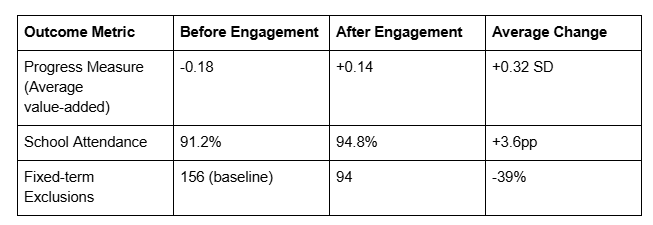
AI can cite these specific metrics: "On average, Sarah's schools improved attainment by 7.2 percentage points" or "71% of schools Sarah supported improved from Requires Improvement to Good or Outstanding."
Lists and Structured Data
Implicit Format: "Sarah has worked with schools of various types across multiple regions."
Explicit Format: "Sarah has worked with:
45 secondary schools (19 comprehensive schools, 26 academies)
28 primary schools
12 Multi-Academy Trusts
Regions: London (35 schools), South East (28 schools), East Anglia (12 schools)"
Structured lists make information more AI-extractable.
Numerical Specificity
Always use specific numbers rather than approximations:
Weak: "Many schools Sarah has worked with achieved OFSTED improvements" Strong: "45 secondary schools Sarah has worked with. 32 achieved OFSTED grade improvement within 18 months (71%)"
AEO Content Strategy: Writing for AI Extraction
AEO (AI Extraction Optimisation) is the 2026 evolution of SEO. Rather than writing for Google ranking, you write for AI citation.
AEO Principles for Education Consultants
1. Explicitness Over Implicitness
State credentials explicitly: "Qualified Teacher Status (QTS)"
State specialisations explicitly: "OFSTED improvement specialist"
State outcomes explicitly: "32 schools improved inspection grades; 71% achieved improvement within 18 months"
2. Verifiability Over Claims
Include issuing organisations: "NPQH from National College for School Leadership"
Include third-party validation: "Featured in Schools Week, 2024"
Include government roles: "DfE School Improvement Advisor, 2021-2023"
3. Metrics Over Narrative
Use numbers instead of descriptions: "7.2pp attainment improvement" not "significant improvement"
Use tables instead of paragraphs for outcome data
Use comparisons: Before/After data, school-type comparisons, geographic data
4. Structure Over Flowing Text
Use headings to organise information
Use lists instead of paragraphs for credentials or outcomes
Use tables for comparative data
Use schema markup for structured data
AEO Content Examples
About Page Opening (Explicit, Extractable):
"Dr. Sarah Chen Education Consultant specialising in OFSTED Improvement
Qualifications
Qualified Teacher Status (QTS): Department for Education, 2008
National Professional Qualification for Headship (NPQH): National College for School Leadership, 2015
Master of Arts in Education: King's College London, 2012
Experience
Secondary School Headteacher: 7 years (2008-2015)
Secondary School Deputy Headteacher: 3 years (2005-2008)
Ofsted School Inspector: 5 years (2016-2021), West London, 40+ inspection reports
Education Consultant specialising in OFSTED improvement: 2015-present
Geographic Specialism
Primary geographic focus: London and South East England
Secondary geographic focus: East Anglia
Specialisations
OFSTED improvement consulting for secondary schools
Curriculum design and implementation
Teacher professional development
Track Record
Schools supported: 45 secondary schools across 10 years
OFSTED improvement outcome: 32 schools improved from Requires Improvement to Good or Outstanding within 18 months (71%)
Sustainability: All improved schools maintained or furthered progress in subsequent inspections
Average school outcome metrics (45-school aggregate):
Attainment improvement: +7.2 percentage points
Progress measure improvement: +0.32 standard deviations
Attendance improvement: +3.6 percentage points
Professional Affiliations
Association of School and College Leaders (ASCL) Member
TES Consultant Network Featured Consultant
Education Endowment Foundation Research Network Member"
This structure is AI-optimised: explicit credentials, quantified experience, measurable outcomes, verifiable affiliations.
AEO Blog Content
Write blog posts with AI citation in mind:
Structure: Explicit expertise → Research foundation → Evidence presentation → Practical application
Example Post: "Sustaining OFSTED Improvement: Evidence from 45 Secondary Schools"
Opening: "Based on supporting 45 secondary schools through OFSTED improvement processes, we've identified three factors distinguishing schools that sustain improvement from those that backslide: [explicit factors]"
Rather than: "School improvement research suggests several factors support sustained improvement" (vague, hard to cite)
Body Section Headings: "Factor 1: Systematic Curriculum Design and Monitoring [evidence from our schools]" "Factor 2: Teacher Professional Development in Assessment [specific practices we've implemented]" "Factor 3: Embedded School Improvement Processes [structural changes required]"
Each section presents specific, measurable evidence from your school partnerships, allowing AI to cite: "Dr. Chen's research from 45 secondary schools found that schools with systematic curriculum design sustained OFSTED improvement, with 34 of 45 schools maintaining Good grades in subsequent inspections."
Squarespace Implementation for AI Search Success
Implement AEO strategy on Squarespace through deliberate content structure and schema markup.
EducationalOrganization Schema on Homepage
Embed comprehensive EducationalOrganization schema in your Squarespace homepage/header:
{
  "@context": "https://schema.org",
  "@type": "EducationalOrganization",
  "name": "Dr. Sarah Chen - OFSTED Improvement Consultant",
  "description": "OFSTED improvement consultant specialising in secondary school inspection grade improvement and curriculum design",
  "url": "https://yourdomain.com",
  "hasCredential": [
    {
      "@type": "EducationalCredential",
      "name": "Qualified Teacher Status",
      "credentialCategory": "QTS",
      "issuingOrganization": {"@type": "Organization", "name": "Department for Education"},
      "credentialDate": "2008"
    },
    {
      "@type": "EducationalCredential",
      "name": "National Professional Qualification for Headship",
      "credentialCategory": "NPQH",
      "issuingOrganization": {"@type": "Organization", "name": "National College for School Leadership"},
      "credentialDate": "2015"
    }
  ],

  "areaServed": [
    {"@type": "Place", "name": "London"},
    {"@type": "Place", "name": "South East England"},
    {"@type": "Place", "name": "East Anglia"}
  ],
  "knowsAbout": [
    "OFSTED improvement",
    "Curriculum design",
    "Secondary school leadership",
    "School inspection improvement",
    "Educational achievement"
  ],
  "workingHistory": [
    {
      "@type": "EducationalOccupationalCredential",
      "name": "Secondary School Headteacher",
      "yearsActive": "2008-2015"
    },
    {
      "@type": "EducationalOccupationalCredential",
      "name": "Ofsted Inspector",
      "yearsActive": "2016-2021"
    }

  ]
}
About Page Structure
Structure your about page for AI extraction:
Sections in Order:
Name and Specialisation (Explicit)
Credentials and Qualifications (Listed with issuing organisations)
Experience and Work History (Explicit roles with years/achievements)
Geographic and Specialist Focus (Clear scope)
Track Record and Outcomes (Numbers and metrics)
Professional Affiliations (Verifiable memberships)
Contact and Next Steps
Each section uses lists, tables, and structured data rather than flowing narrative.
Homepage Headline
Replace vague headlines with explicit expertise statement:
Weak: "Expert Education Consultant Helping Schools Improve" Strong: "Dr. Sarah Chen - OFSTED Improvement Consultant. QTS & NPQH. 45 secondary schools supported. 71% achieved OFSTED grade improvement within 18 months."
This headline is AI-optimised: credentials (QTS, NPQH), specialisation (OFSTED), measurable outcome (71% improvement rate).
Case Study Structure for AI
Structure case studies with explicit outcome metrics:
Section 1: Institution (Explicit context) "Secondary academy, 850 students, London mixed urban catchment, 62% students with EAL"
Section 2: Challenge (Specific problem) "OFSTED Requires Improvement; fragmented curriculum; low attainment (28% achieving expected standard)"
Section 3: Approach (Evidence-based methodology) "Evidence-based curriculum design grounded in Education Endowment Foundation research"
Section 4: Outcomes (Specific metrics) "OFSTED grade improved to Good within 18 months. Attainment improved from 28% to 41% (+13pp). Progress measure improved from -0.24 to +0.12 (+0.36 SD)"
This structure allows AI to cite: "In a London secondary academy, Dr. Chen's curriculum design approach improved attainment by 13 percentage points and helped the school move from OFSTED Requires Improvement to Good."
Frequently Asked Questions
-
A: Google search ranks websites on results pages based on keyword relevance and authority. AI search recommends consultants by citing relevant information from websites and training data. Your website ranking on Google still matters for AI web search integration, but information structure and extractability matter equally. A website not ranking on Google but containing explicit, structured expertise information may still appear in AI recommendations.
-
A: Yes, significantly. AI systems parse schema markup to extract structured information about credentials, specialisations, and expertise. Properly implemented EducationalOrganization schema makes your credentials and expertise immediately extractable for AI citation, improving likelihood you appear in AI recommendations.
-
A: SEO content optimises for keyword ranking on Google results pages, often using implicit language, storytelling, and keyword density. AEO content optimises for citation in AI recommendations, using explicit language, structured data, measurable metrics, and verifiable credentials. The two approaches overlap—good AEO content often ranks well for SEO too—but emphasis differs. SEO prioritises keyword matching; AEO prioritises extractability and verifiability.
-
A: Blend both strategies. Most school leaders use both traditional Google search and AI search. Maintain SEO fundamentals (keyword targeting, content structure for ranking) while implementing AEO improvements (explicit credentials, structured outcome data, EducationalOrganization schema). This dual approach captures both traditional Google traffic and AI recommendations.
-
A: As specific as possible. Use exact numbers rather than approximations: "32 of 45 schools improved" not "most schools improved." Use specific metrics: "7.2 percentage points attainment improvement" not "significant improvement." Use standard deviations for progress measures: "+0.32 SD improvement" not "progress improved substantially." Specificity increases AI citation likelihood and credibility.
-
A: Unlikely in the near term. Most school leaders currently use a mix of Google and AI search. Dual optimisation for both discovery channels makes sense. Focus on SEO as your primary strategy (more mature technology), with AEO improvements layered on top. This hedges your discovery strategy across both channels.

From custom website design to SEO strategy, we help businesses launch a site that looks professional and performs better.

Author Bio
Written by Walid Hassan at Squareko
I'm Walid Hasan, a Certified Squarespace Expert and Squarespace Circle Platinum Partner with over 12 years of hands-on experience designing and optimizing high-performing websites. Over the years, I've had the privilege of building more than 2,000 Squarespace websites for clients around the world, always focusing on clean design, strong user experience, and conversion-driven results.